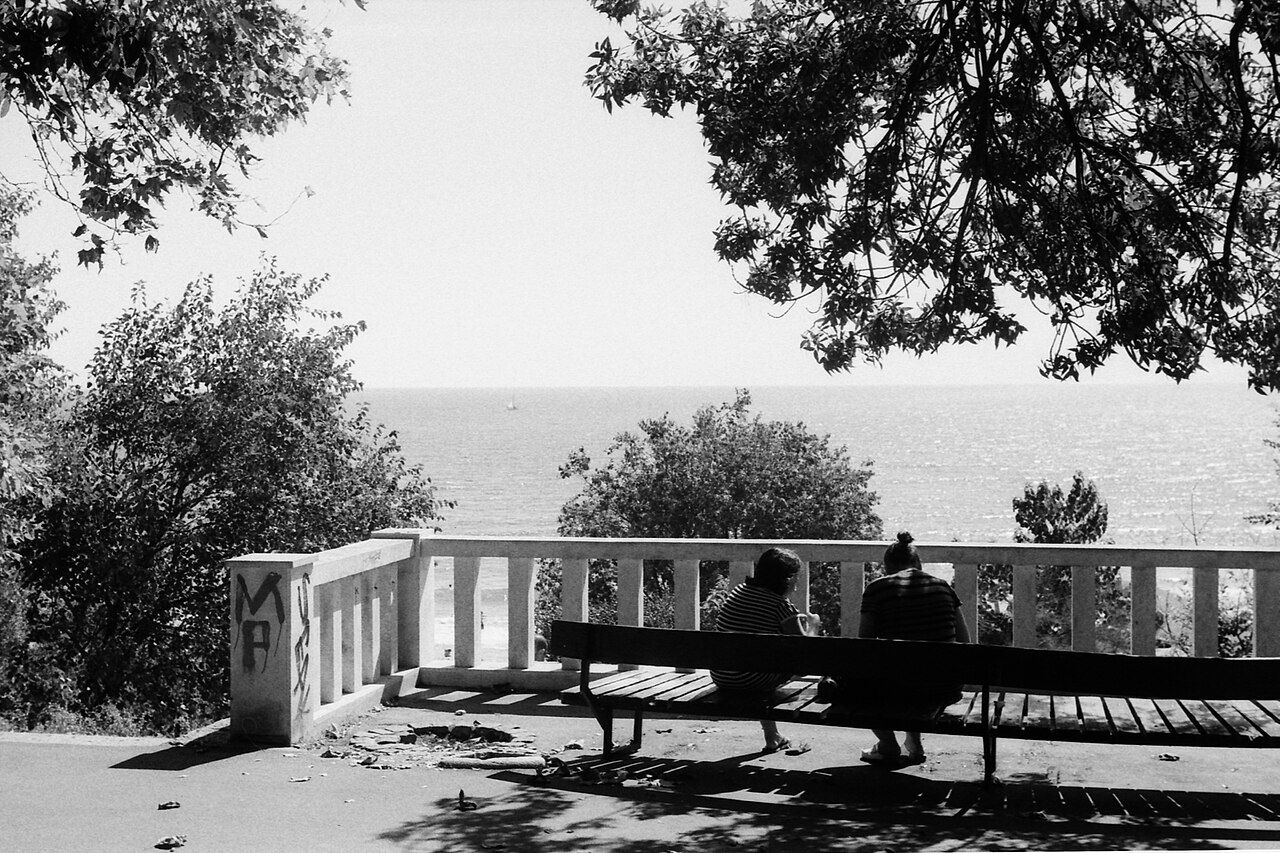
Varna is Bulgaria's largest port on the Black Sea and the country's third city, yet it meets a ship more gently than most ports of its size. Ships calling here usually tie up at the passenger terminal close to the centre, and within a few minutes of the gangway you can be under old trees in the Sea Garden, on the edge of a Roman bath house, or in front of a case of gold worked more than six thousand years ago. The city was the Greek colony of Odessos before it was Roman, Byzantine, Bulgarian and Ottoman, and pieces of each lie within walking distance of the water. A day on foot covers the main things without hurry.
From the pier into the Sea Garden
The Sea Garden, Morska Gradina in Bulgarian, runs north-east along the shore from near the port for several kilometres, a long strip of park laid out from the late nineteenth century on what had been bare slope above the beach. Its main alleys are shaded by mature trees, lined with benches and with busts of writers and national figures, and they stay noticeably cooler than the streets at midday. Paths drop away on the seaward side, down steps and terraces, to the beach and the promenade below.
Much of the early planting is credited to a Czech gardener employed by the city in the late nineteenth century, and the mix of native and exotic trees chosen by him and his successors has grown into a deep canopy of limes, planes, chestnuts and pines.
Inside the garden you pass the city aquarium near the entrance, an open-air summer theatre, flower beds kept with obvious civic pride, and monuments from most decades of the last century. Further along, the park becomes looser and quieter. If you want only a taste, walk the first kilometre along the upper alley, take any flight of steps down to the sea, and come back along the shore. The light off the water in the morning is soft and silvery; by the afternoon the beach below is full.
The Roman Thermae
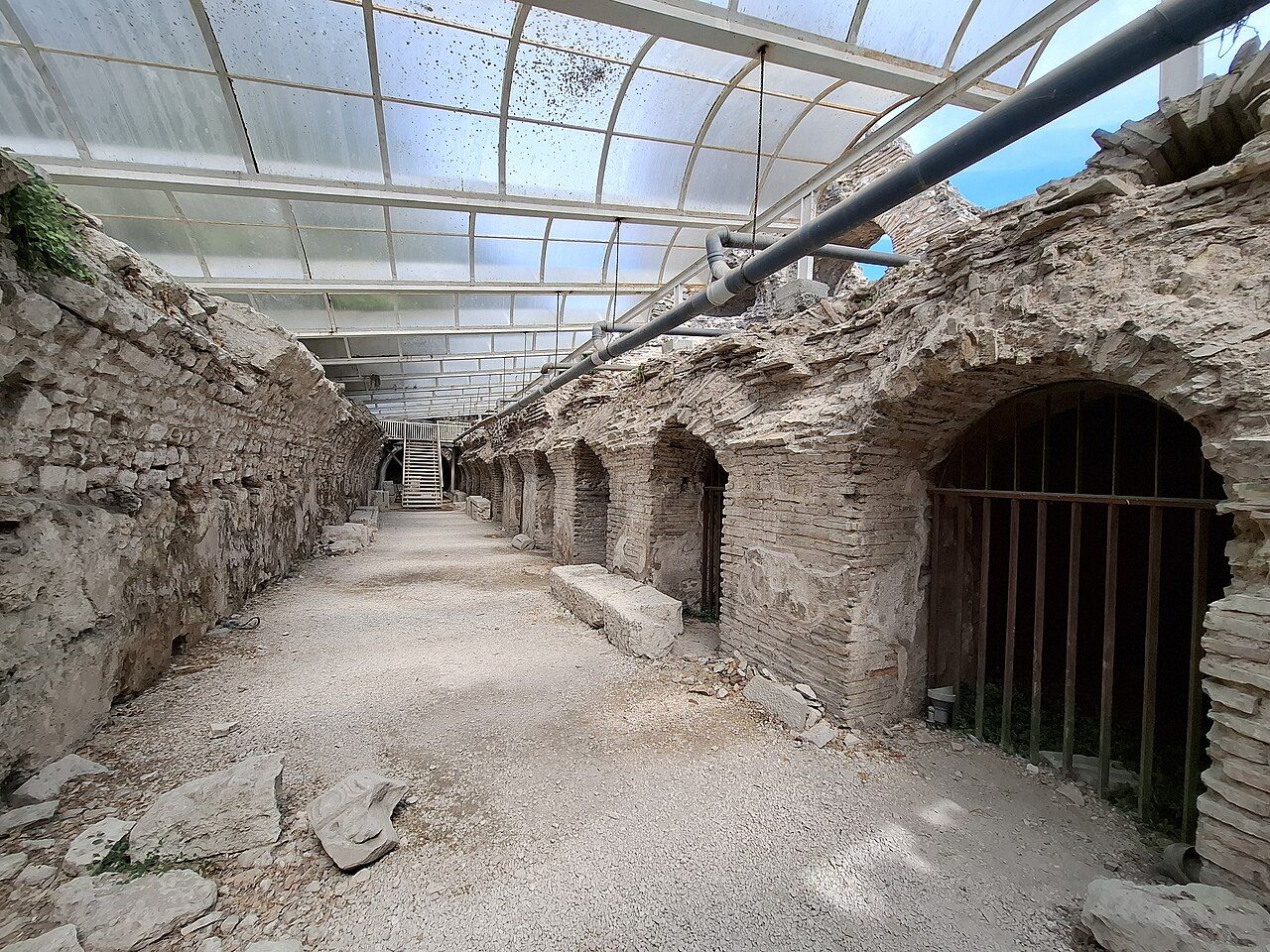
A few streets in from the port, in the old quarter that locals still call Grutska Mahala, the Greek quarter, the walls of the Roman baths rise among ordinary houses. Built towards the end of the second century AD, when Odessos was a prosperous Roman town, they were the largest public baths in what is now Bulgaria and among the largest in the Balkans. What survives is mostly brick and mortared rubble: tall walls, the outlines of the hot and cold halls, and the low channels where hot air once ran beneath raised floors.
You do not need much imagination for the scale. Stand in the middle of the main hall, look up at the height of the remaining walls, then try to roof it in your mind. The site is compact and can be seen in half an hour. Smaller fragments of other baths and of the ancient walls turn up in the surrounding streets, often fenced off in a gap between apartment blocks.
The streets of Grutska Mahala are worth a slow loop in their own right. Low houses with tiled roofs, a nineteenth-century church or two and the odd restored mansion stand among later blocks, and the lanes run downhill towards the port, so you never lose your bearings for long. This was the Greek and merchant quarter of the Ottoman-era town, and the ancient city of Odessos lies beneath it. Look out for fragments of carved stone set into garden walls; they turn up more often than you would expect.
The oldest gold, in the Archaeological Museum
The Varna Archaeological Museum fills a large late nineteenth-century building put up as a girls' school, on a boulevard a short walk inland from the cathedral. Its rooms move through the city's long history, Thracian, Greek, Roman and medieval, but most visitors come for one collection. In 1972 workers digging a trench on the western edge of the city struck a cemetery from the fifth millennium BC, the Copper Age. The graves held copper tools, flint blades, pottery, shells and gold: bracelets, beads, small plaques once sewn to clothing, and a sceptre in one exceptionally rich burial.
The Varna Necropolis gold is widely regarded as the oldest worked gold yet found anywhere, made well over a thousand years before the pyramids of Egypt. In the display cases the objects are small and plain, with none of the intricacy of later Thracian treasure, and that is exactly what makes them striking. The people buried here were among the first anywhere to find, melt and shape the metal, and to lay it in graves as a mark of rank. Allow at least an hour, longer if the rest of the collection catches you; the museum is the best thing in Varna for a wet port day.
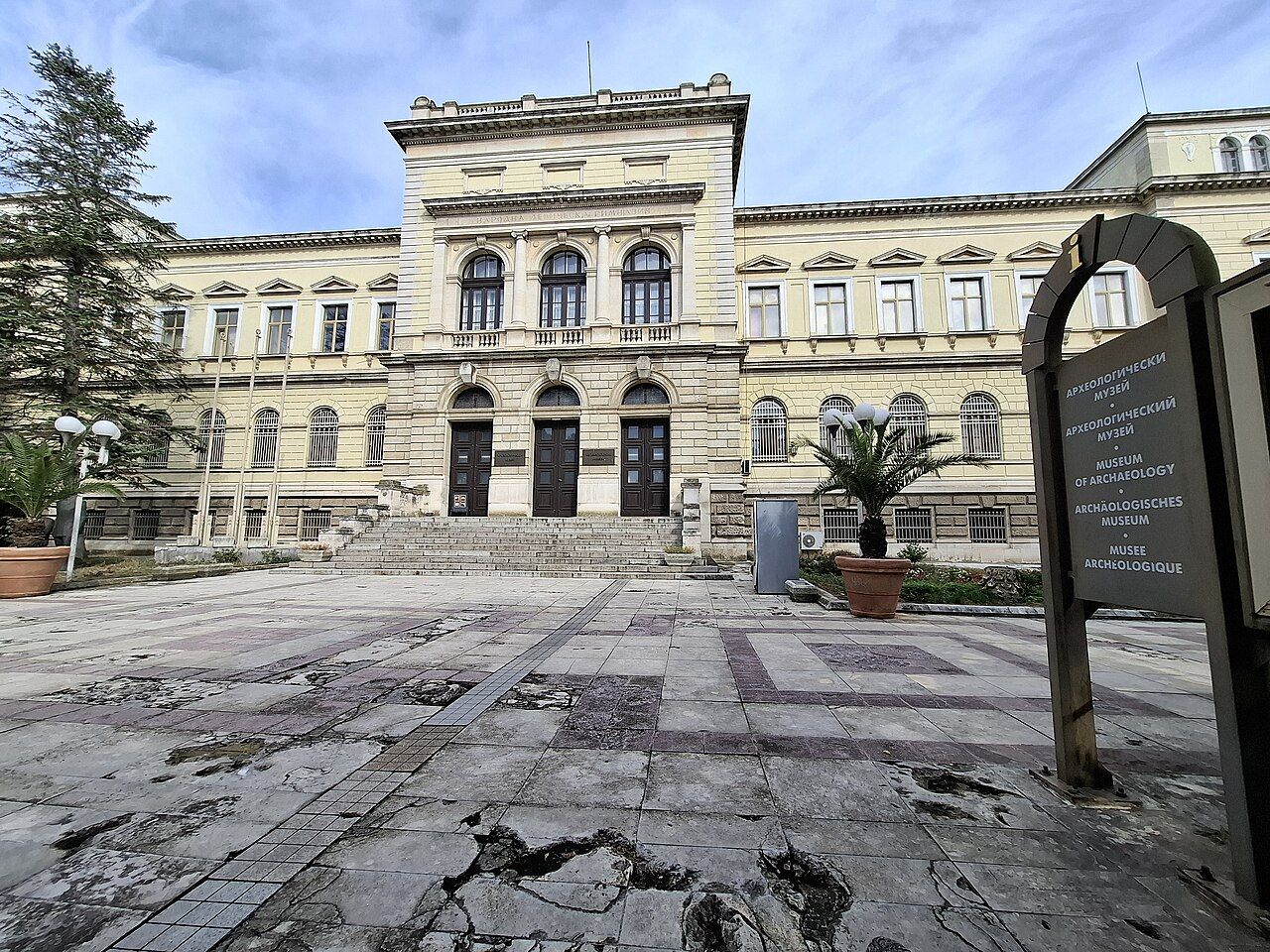
In the display cases the objects are small and plain, with none of the intricacy of later Thracian treasure, and that is exactly what makes them striking.
The Dormition Cathedral and the centre
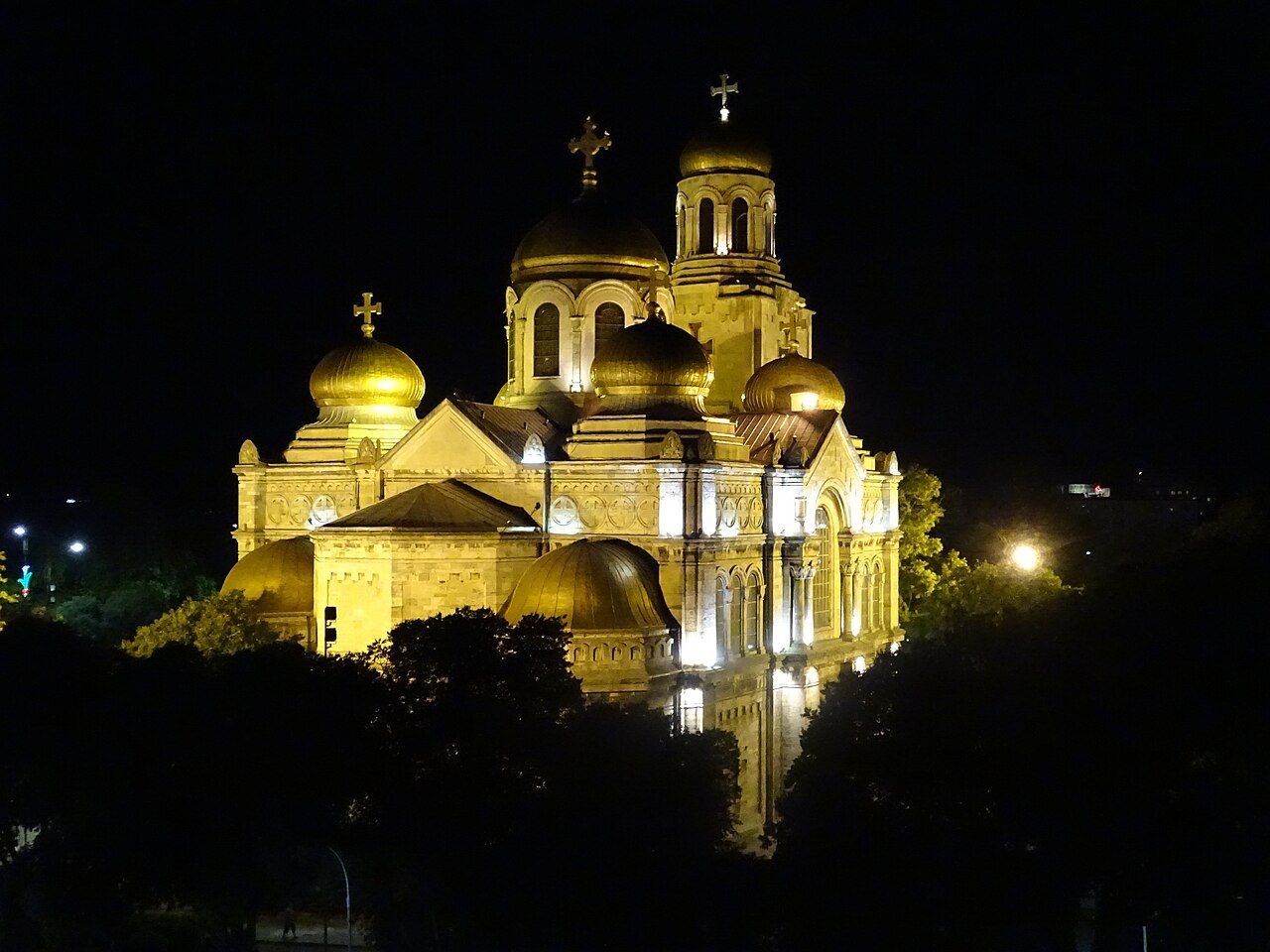
The Cathedral of the Dormition of the Mother of God stands on a square at the top of the main pedestrian streets, its gilded domes visible from much of the centre. It was built in the 1880s, in the first years after Bulgaria's liberation from Ottoman rule, and was paid for partly by public subscription, a statement of a new state's identity in a port that had long been mixed. Inside, the iconostasis is carved wood and the walls are painted in deep colours, the murals added in the twentieth century. Dress as you would for any working church, shoulders and knees covered, and keep your voice low during services.
From the cathedral the pedestrian streets lead back towards the sea through the heart of the modern city, past the opera house and the main square, with shade and benches for a pause. Since 1 January 2026 Bulgaria has used the euro, so there is no currency to change if you arrive from another euro country, and cards are widely accepted in the centre. If your ship continues north, the next call is often Romania's big port, described in our story on the Casino and Ovid's Tomis.
The beach below the garden
Below the Sea Garden the city beach stretches north from the port in a long band of fine pale sand, broken by small piers and breakwaters. In July and August it is lively and crowded from mid-morning, with music, umbrellas and loungers for hire; in June or September it is calmer and the water is still warm enough for most swimmers. The promenade behind it, at the foot of the garden's slope, is lined with seasonal bars and kiosks that shutter when the season ends.
A swim here is an easy end to a port day. The sea shelves gently, there is no tide to speak of, and the lifeguarded stretches are marked in season. Keep an eye on the time, because the walk back to the ship from the far end of the beach is longer than it looks from the sand. If your ship goes on south instead, the coast leads to the old town of Nesebar and to Burgas with its salt lakes and pelicans, each a different kind of Bulgarian shore. North of the city the coast runs on past older spa resorts to the big beach resort of Golden Sands, which is a different kind of place altogether and needs a taxi rather than a walk.
More ports on this coast: Bulgaria and Romania.