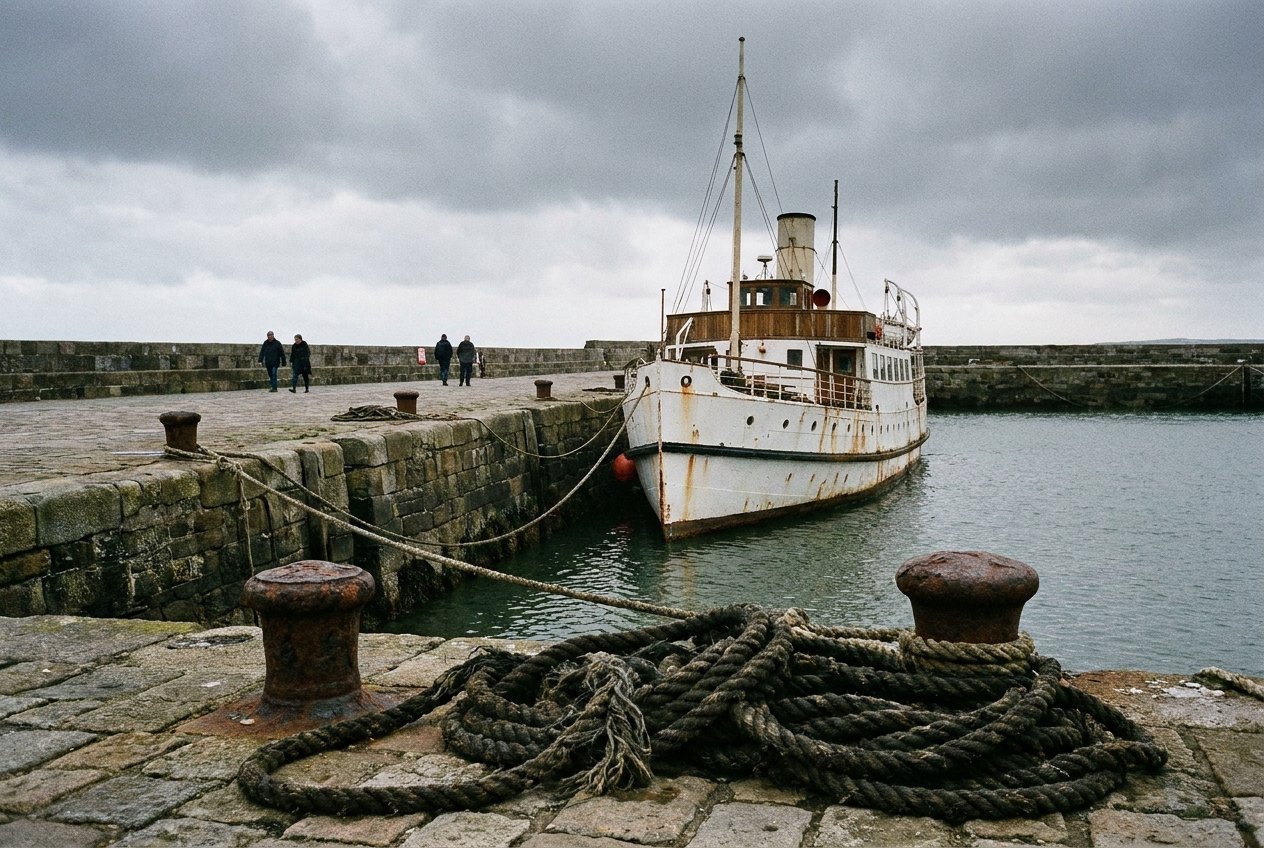
A cruise passenger on the Black Sea follows routes much older than any ship. The ports where you step ashore today, at Nesebar, Varna, Constanța, Sinop or Trabzon, were founded as stopping places on a sea crossed by merchants and colonists in the first millennium BC. Since then the ways around the sea have opened and closed with the fortunes of empires, and pleasure travel has only ever been a recent passenger on top of trade. This is the story in brief, told from the deck.
Greek colonies and the Pontic trade
From the seventh and sixth centuries BC, Greek cities on the Aegean, Miletus above all and Megara too, sent out settlers to found colonies all round the shores of the Pontos, as they called the sea. Sinope on the Turkish coast, Apollonia at today's Sozopol, Odessos at Varna, Tomis at Constanța, Histria near the Danube, Olbia on the northern estuaries and many more began as trading posts with harbours and temples. Mesembria, the old town now called Nesebar, was another, founded on its rocky peninsula. Most of these places are still ports, and walking ashore you are often standing on the old Greek town.
The Greeks first called the sea inhospitable, and later, perhaps hopefully, Euxeinos, the hospitable sea. What drew them was trade: grain from the plains to the north, fish, timber, metals and slaves, carried south through the Bosphorus to feed Athens and the Aegean cities, with wine, oil and fine pottery going the other way. The kingdom of Pontus later ruled much of the southern and eastern coast, and Roman forts and harbours followed. Medieval Byzantine, Genoese and Venetian merchants worked the same routes, until the Ottomans closed the sea to foreign shipping from the late fifteenth century for close to three hundred years.
Steamers out of Odesa
The sea reopened by stages from the late eighteenth century, as Russia pushed to its northern shore and won rights for its merchant ships to pass the straits. Odesa was founded in 1794 and grew within decades into the great grain port of the Russian Empire, with its broad stairs running down to the harbour; the city's story is told in our guide to Odesa's port and stairs. Steam came to these routes in the first half of the nineteenth century, and by its second half steamers ran on regular timetables between Odesa, the Crimean ports, Constantinople, the Danube mouths and the Caucasus coast, carrying mail, cargo and passengers together.
Those passengers included many who travelled for reasons that look familiar. Visitors went south to the Crimean coast for its mild air, and wealthy families from the cities took summer sea air at the new resorts. Large numbers of pilgrims also sailed from Odesa through the Bosphorus towards the Holy Land, crowded on deck for days, and their journeys made the passage of the straits one of the busiest passenger routes of the age. The railway reached Batumi in the 1880s and opened a new end of the sea to steamers.
Soviet-era passenger lines
For most of the twentieth century the northern and eastern shores lay inside the Soviet Union, and travel there was organised by the state. Passenger lines ran along the coast between Odesa, the Crimean ports and the Caucasus resorts as far as Batumi, carrying holidaymakers to sanatoriums and beaches as part of a regular network of coastal services. A berth on deck or a small cabin on the coastal line was, for many families, the summer itself. Bulgaria and Romania built large seaside resorts of their own on the western shore in the same decades, and the coastal ships helped tie the eastern bloc's summer together.
The Turkish coast followed a separate rhythm, with its own coastal services linking Istanbul to Sinop, Samsun, Trabzon and the ports in between, for local travellers as much as for visitors.
The open seasons
When the Soviet Union broke up in 1991, the coastal passenger network largely faded with it. Then, through the 2000s and into the 2010s, the Black Sea became a regular summer destination for international cruise ships coming up through the Bosphorus from the Mediterranean. A typical loop might take in Istanbul, a Bulgarian port such as Varna or Nesebar, Constanța, Odesa, the Crimean ports, the Caucasus coast, Batumi and Trabzon, all in a week or so. For a few seasons a passenger could sail clockwise or anticlockwise round much of the sea.
The contraction after 2014 and 2022
The open years ended in two steps. After Russia's annexation of Crimea in 2014, international ships stopped calling at the Crimean ports, and many itineraries on the northern and eastern shores were cut back or dropped. After Russia's full-scale invasion of Ukraine in February 2022, cruise calls at Odesa and the other Ukrainian ports stopped entirely, and much of the northern and western sea became a war zone, with drifting mines and shipping risks reaching well beyond the coast.
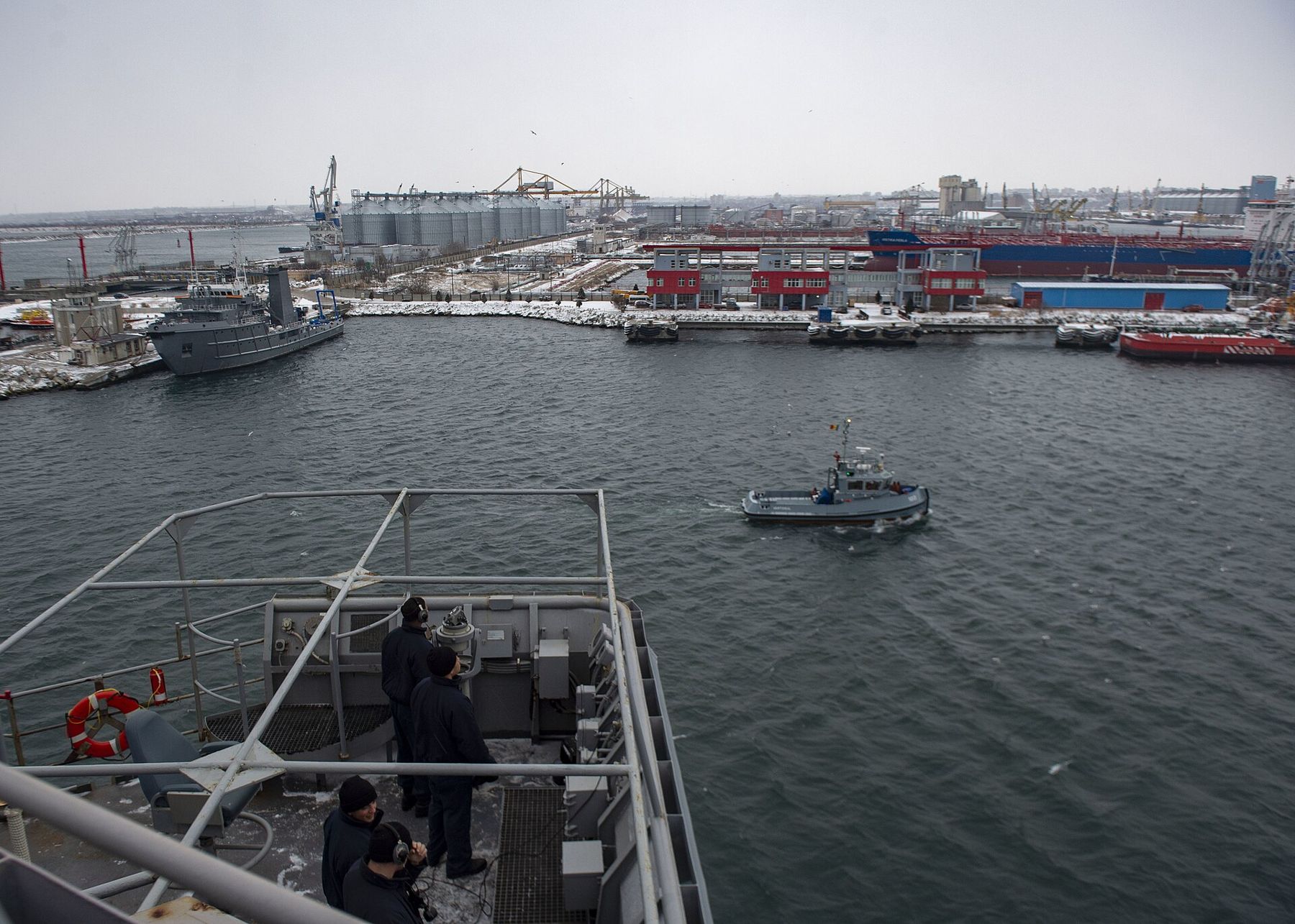
What remains is a smaller sea for passengers. Ships calling here usually keep to the Bosphorus, the Bulgarian and Romanian coasts, Turkey's northern shore and Batumi, and which ports receive calls changes from year to year with security, insurance and demand. For the passages that still run, the gate is the same as ever, the strait described in sailing the Bosphorus.
Reading the old routes ashore
The long history shows wherever you land. The Greek and Roman layers lie under the streets of Constanța and in the walls of Nesebar; Ottoman forts guard the river mouths; nineteenth-century warehouses and customs houses line the old steamer quays; and in some harbours the concrete terminals of the Soviet coastal lines still stand, too large for today's traffic. A passenger who looks for these traces will find that every call is part of a much longer voyage.
More ports on this coast: Odesa and the north.