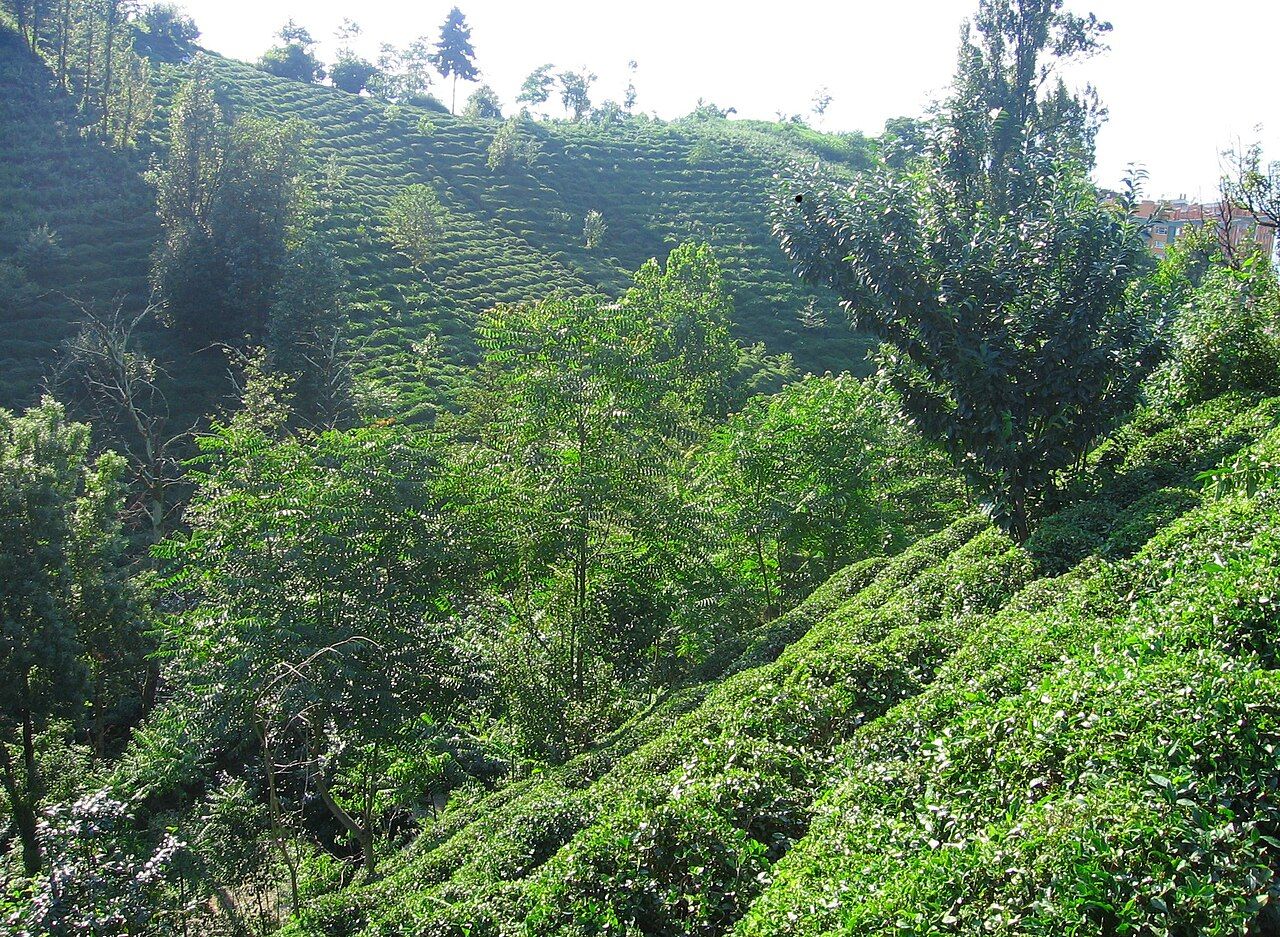
Along the coast east of Trabzon the hills change colour. The darker green of hazel and forest gives way to the bright, close-clipped green of tea, planted in rows that run up slopes so steep they look unworkable, from the edge of the coast road to where the cloud begins. This is Rize, the heart of Turkey's tea country and the reason that a glass of strong black tea is never far away anywhere in the country. Few cruise ships call at Rize itself; most passengers who see it come along the coast road from Trabzon, roughly eighty kilometres to the west, and the drive is part of the point.
Tea from the shore to the cloud line
Tea is a newcomer here. Until the twentieth century these hills grew hazelnuts, maize and fruit, and the region was poor. The young Turkish Republic promoted tea on this coast in the 1920s and 1930s, and after a slow start the plantations spread over the hillsides and became the main source of income for thousands of small family holdings. Almost all of the country's tea is grown in this narrow strip between the sea and the mountains.
The reason is the weather. Rize is the wettest province in Turkey, catching the moist air off the Black Sea as it rises against the mountains, and the mild winters and heavy rain suit the bushes. The terraces you see are seldom the neat stone-walled kind; more often they are narrow paths and steps cut along the contour, with the bushes trimmed into rounded rows between them. The view from the coast road is of a whole landscape combed in one direction.
The harvest season
The picking season runs roughly from May to October, usually in three rounds. The first, in late spring, gives the youngest leaves and is the most prized; the summer and autumn rounds follow as the bushes regrow. During the harvest you see pickers on the slopes with long shears fitted with a bag to catch the leaves, and large baskets carried on the back down to the roadside collection points, where the leaves are weighed and loaded onto trucks for the factories.
If you come in the season, watch the slopes rather than the road: the small figures moving along the rows give the hills their scale. Treat the pickers as people at work, not as a view, and ask before taking anyone's photograph. Outside the season the bushes are simply green, still striking, and the slopes are quiet.
Rize town and its tea garden
Rize itself is a busy modern town on a narrow coastal strip, with a harbour, a seafront road and apartment blocks climbing the hill. On the slope above the centre there is a public tea garden with plantings of the bushes, flower beds and terraces where you can sit with a glass of tea and look down over the town to the sea; it is the easiest place to see the crop close up without leaving town. Above it, the remains of Rize's castle give a slightly higher view.
The rest of the town is ordinary in the best sense, with markets, tea houses full of men playing backgammon, and shops selling loose tea by weight. Prices are in Turkish lira, and cards are widely taken in town but less so in the villages. If you want to bring tea home, buy it here rather than in a resort.
Under the Kaçkar mountains
Behind the tea slopes rise the Kaçkar Mountains, the highest part of the Pontic ranges, with the main summit approaching four thousand metres. From the coast you seldom see them, because the cloud that waters the tea usually hides them too, but on a clear morning their snowfields appear above the green ridges and seem impossibly close. The valleys that run down from them are deep, wooded and wet, with stone and timber villages, summer pastures called yayla high above the tree line, and a culture of mountain farming that is very different from the coast.
A cruise port day can only touch the edge of this. If your ship stays long enough, or you are travelling independently and have more than a day, the mountains reward much more time; the summer plateau of Ayder, with its hot springs and alpine meadows, is the usual base for walks.
The Fırtına valley and Zil Castle
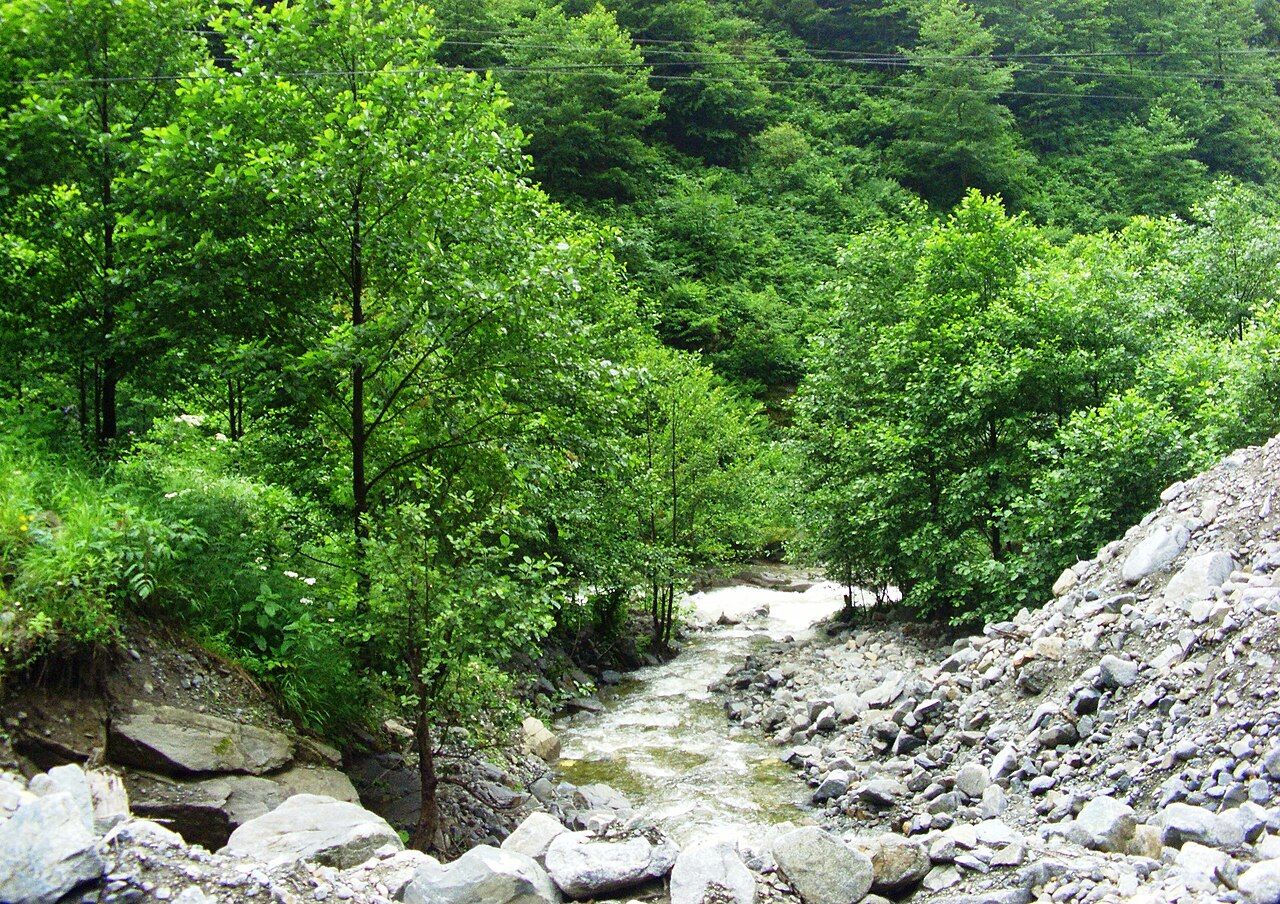
The most rewarding longer trip from the coast goes east to Ardeşen and then up the Fırtına valley. Fırtına means "storm" in Turkish, and the river is a fast, cold, green torrent coming down from the Kaçkars. Old single-arched stone bridges cross it at intervals, high and narrow, some of them still in use by villagers on foot. Above the village of Çamlıhemşin the road climbs on through forest.
Higher up, on a rocky spur above the valley, stands Zil Castle, Zilkale, a medieval fortress of grey stone with a tall central tower, its walls following the edge of the rock. Its origins are debated, and it is best seen as part of the valley rather than as a monument to study. Heavy rain can close the road, and the whole trip is too much for a short port day.
Fitting it into a port day
From a ship in Trabzon, a day to the tea country means two to three hours on the road in total, more with traffic, and a trip to Zil Castle stretches that well beyond what most port days allow. A shorter version, along the coast to Rize, up to the tea garden and back with stops at roadside slopes, fits comfortably. Bring a rain jacket in any season, and shoes that grip on wet steps.
From Rize the coast continues east towards the Georgian border and Batumi, where the green hills continue in the uplands of Ajara and in the subtropical plantings of the Batumi Botanical Garden. Back west, the cliff monastery of Sümela is the other great day trip from Trabzon.
More ports on this coast: Turkey's northern shore.