A few kilometres south of Batumi, past the airport and the wide gravel bed of the Chorokhi river, the road reaches a village that grew up around an old fortress. Gonio-Apsaros is a rectangle of dark stone walls with towers at intervals, set among gardens and fruit trees, a short distance from the beach and close to the Turkish border. It is one of the oldest fortified places on the eastern Black Sea coast, and for a passenger in Batumi it is the easiest way to step out of the modern city into something much older.
Where the fort stands
The site sits on the coastal plain just south of the Chorokhi mouth, the river that comes down from the mountains of north-eastern Turkey and reaches the sea here in a fan of grey stones and braided channels. That position explains the fort. Whoever held it watched the river mouth, the coastal road and the approach from the south, along a strip of land squeezed between the mountains and the sea. From the walls today you can see the hills close inland, and on a clear day the higher ridges across the border.
The village of Gonio and its neighbour Kvariati have pebble beaches and small guesthouses, and the border crossing at Sarpi is only a little further on. The fortress itself stands slightly back from the shore, so it is quiet and green rather than seaside.
Roman Apsaros
The Romans knew the place as Apsaros, and by the first and second centuries AD it was a garrison fort on the empire's far north-eastern edge, guarding a coast where the Caucasus met the sea. A Roman report of the second century counts five cohorts stationed here, which would make it one of the larger military posts on this shore. The soldiers lived in barracks laid out in the regular Roman manner, with a commander's quarters, baths, a water supply and drainage.
The name is older than the fort. Tradition holds that it comes from Apsyrtus, the brother of Medea in the Argonaut story, who is said to have been killed and buried somewhere on this coast during the flight from Colchis. The legend is one more thread tying this corner of Georgia to the tale of the golden fleece, also told in the statue that stands over Europe Square in Batumi.
The walls you walk along
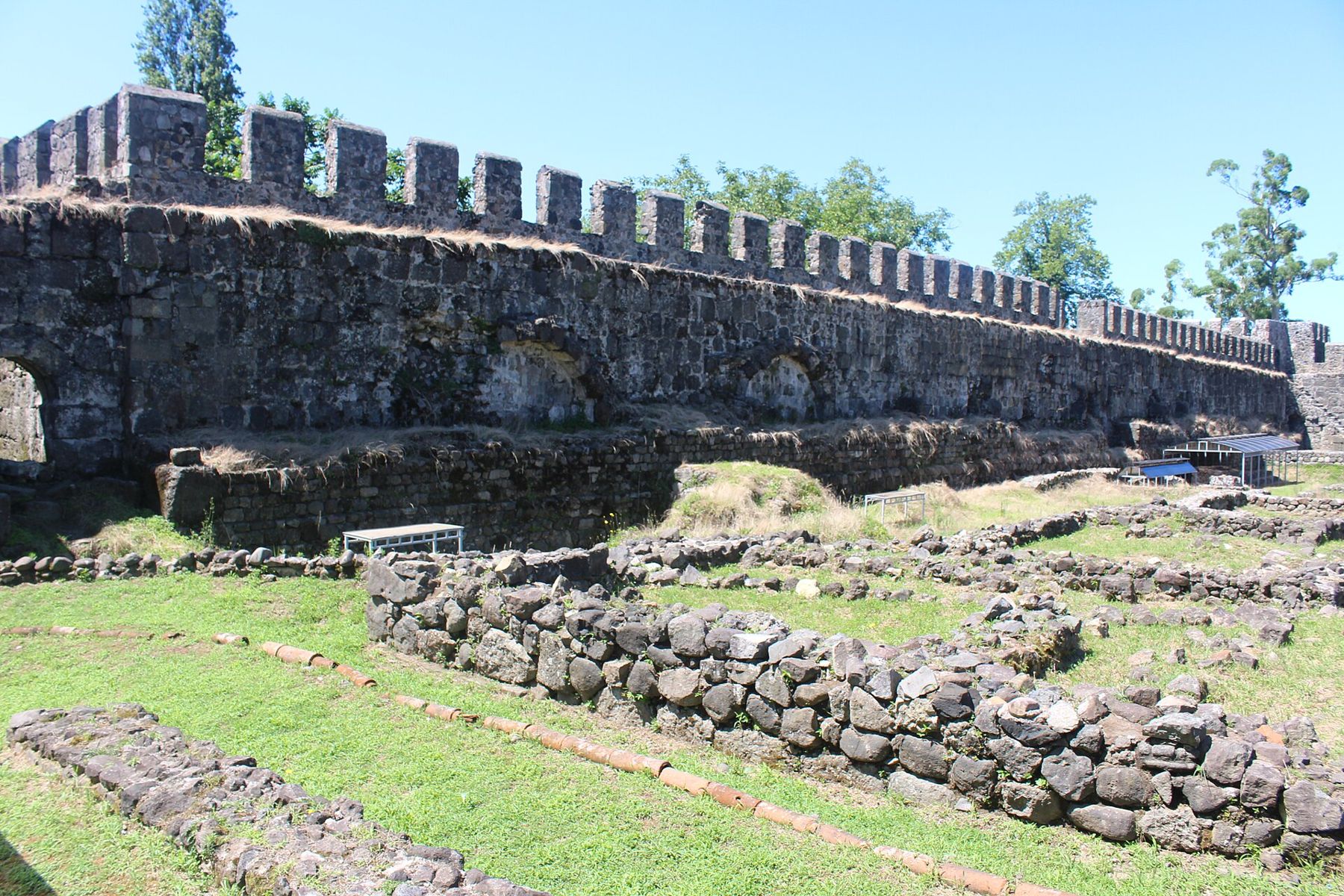
What stands today is not the Roman fort exactly. The walls you see were rebuilt and patched over many centuries, by Byzantine engineers and later by the Ottomans, who held the place from the sixteenth century and gave it the name Gonio. The plan, though, is the old rectangle: a long circuit of walls of rough dark stone, crenellated along the top, with around eighteen towers set into it and gates on more than one side. The walls are thick and in places stand to a good height, and their tops carry a fringe of grass and small shrubs.
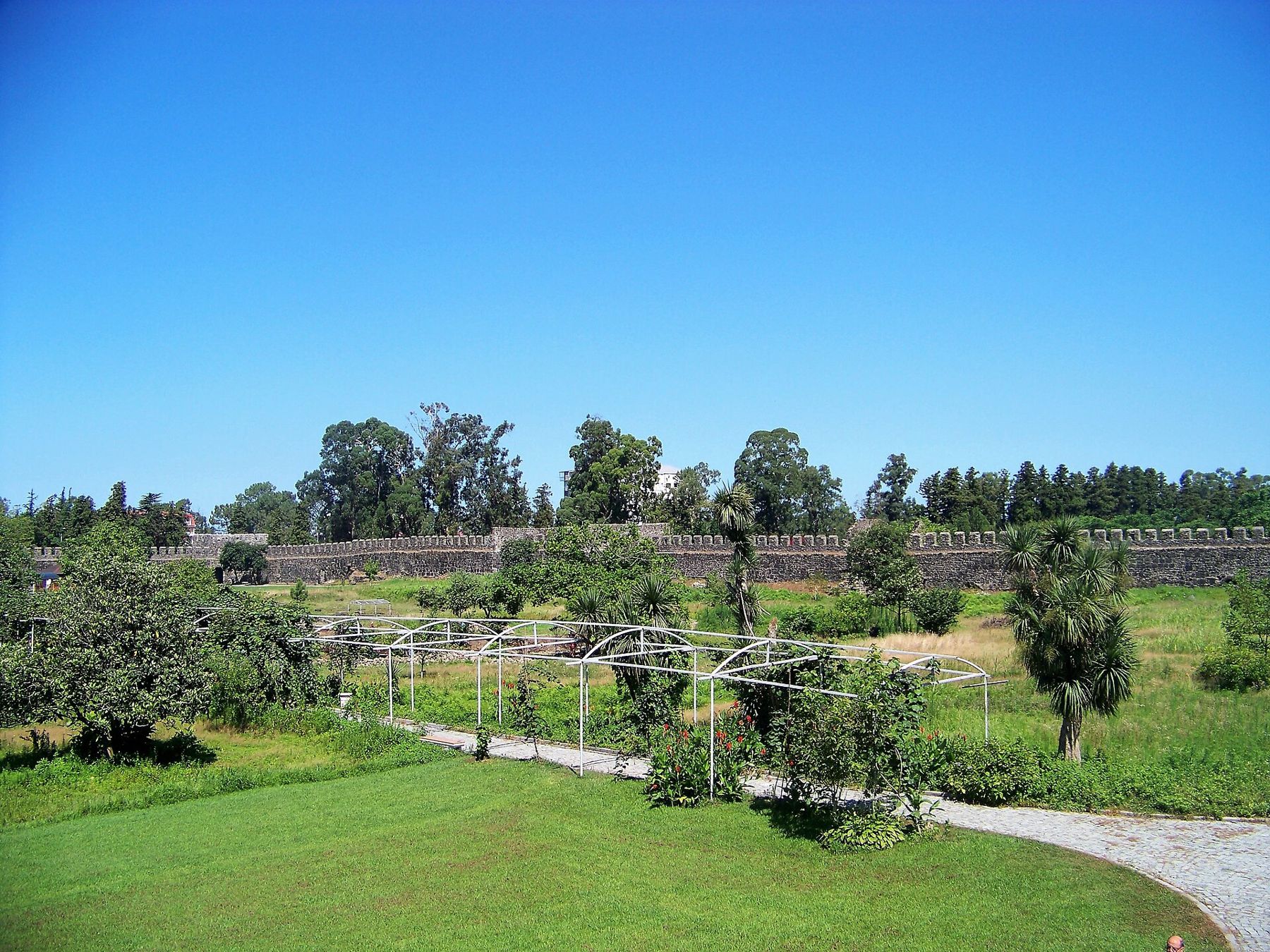
Inside, the space is surprisingly open. Much of the interior is lawn and garden, with trees and flowering beds, and the excavated areas show up as low walls of rounded stones laid out in rooms and corridors. Lines of terracotta pipe run across the grass where the water system has been uncovered. Small roofed shelters protect trenches still in use. It is worth walking right round the inside of the walls once, slowly, before deciding where to look more closely.
What has come out of the ground
Excavations here have run for decades and continue. They have uncovered the outlines of Roman barracks and the commander's house, the bath building, a well, drains and roads, along with coins, pottery, tiles stamped by the military units, and gold jewellery of very fine workmanship found within the walls. A small museum on the site shows a selection of the finds, along with plans that make sense of the low walls outside. Some of the most valuable gold pieces have been kept elsewhere at times, so what is on display can vary.
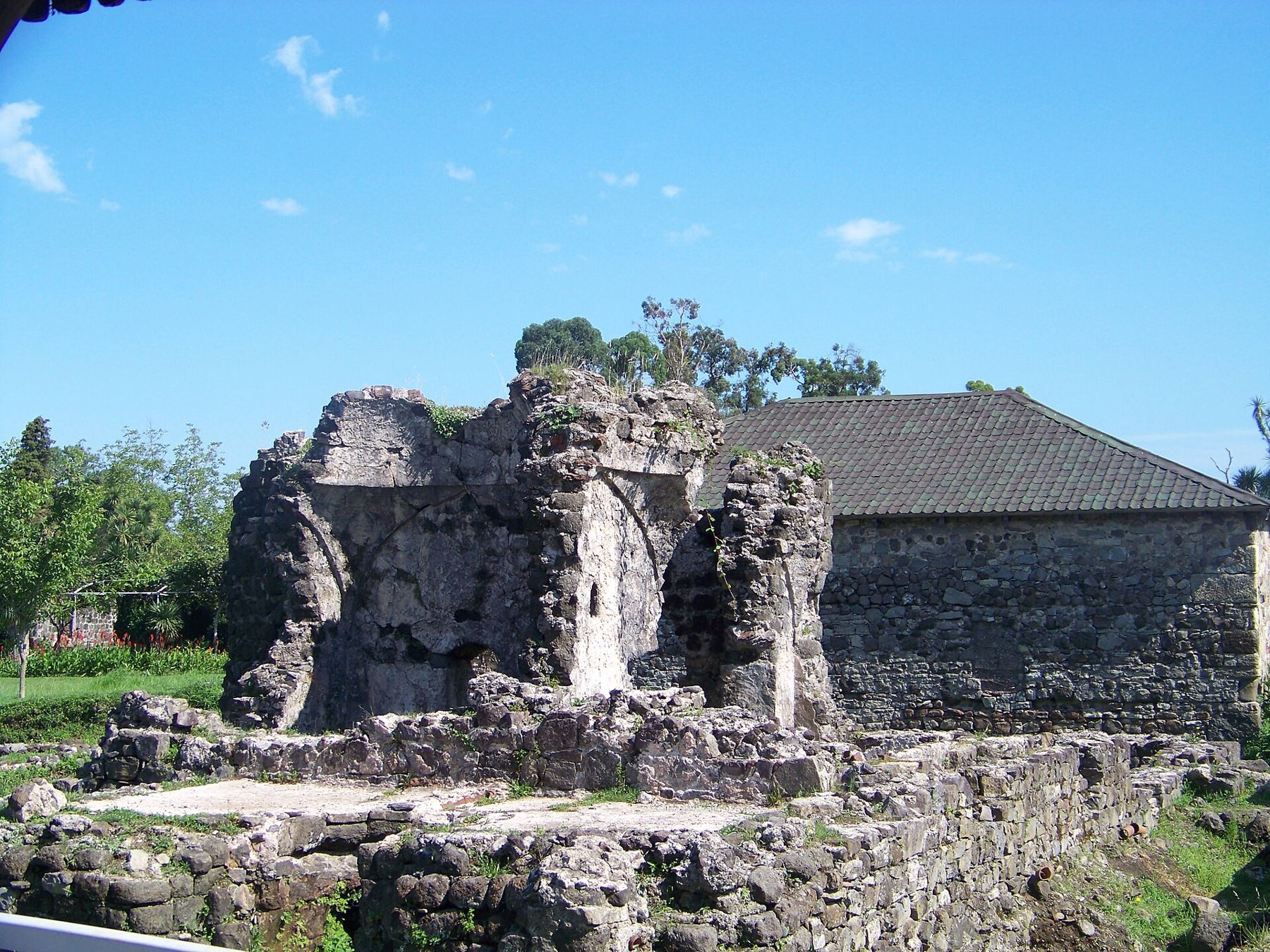
Bring your imagination for the rest. The fort's long life means layers of Roman, Byzantine and Ottoman building sit over one another, and the clearest views are the plans in the museum rather than any single spot outside.
Matthias, in general terms
A long tradition holds that the apostle Matthias, chosen to take the place of Judas among the twelve, preached in this region and is buried within the walls of Gonio. The tradition is cherished locally, and a spot inside the fortress is marked as the grave, but historians treat the burial as a matter of faith and legend rather than of record, and other places also claim the apostle. Visitors who come for this reason should treat the site with the quiet respect due to any place of pilgrimage.
Getting there and timing
From the port in Batumi the ride south takes around half an hour by taxi, depending on traffic through the city and past the airport. Local buses and minibuses also run along the coast road towards the border and stop in the village; ask the driver for the fortress. Agree a taxi fare before you set off, or arrange a return time with the driver.
- Allow an hour inside the walls and the museum, longer if the archaeology draws you in.
- There is little shade on the excavated areas: go early or late on a hot day.
- The ground is uneven grass and stone; sensible shoes help.
Pair the fort with an hour on the beach nearby, or with a drive up the Chorokhi valley if your ship stays long enough; the hill villages are covered in our story on the Ajaran hills. Back in Batumi, the seafront makes a gentle end to the day.
More ports on this coast: Batumi and Ajara.