A word first about the present. Since Russia launched its full-scale invasion of Ukraine in February 2022, no cruise ships have called at Odesa, the port has come under attack, and the waters off the coast carry a risk of mines. This story is a portrait of the city and its history as a port, not a guide to visiting it now.
For most of the two centuries before that, Odesa (Odessa in the older spelling) was the Black Sea's great passenger port, and its approach from the sea was one of the finest arrivals on any coast in Europe.
A city built for the harbour
Odesa is a young city by the standards of this sea. It was founded in 1794, by decree of Catherine the Great, on the site of a small Ottoman fortress and settlement called Khadjibey, as the Russian Empire pushed its southern frontier to the coast. It was planned from the start as a port, laid out on a grid along the top of the low cliffs above the bay, and its early governors were often foreigners in imperial service who brought architects, merchants and settlers from across Europe.
The city grew with startling speed. For much of the nineteenth century it was a free port, and grain from the Ukrainian steppe poured out through its harbour to the Mediterranean and beyond. Greek, Jewish, Italian, Ukrainian, Russian, Armenian, Bulgarian and many other communities made it one of the most mixed and lively cities of the empire, with a reputation for humour, music and commerce that it never lost. In 2023 UNESCO inscribed the historic centre of Odesa on the World Heritage List, and at the same time on the list of World Heritage in Danger.
Much of the old city was built of soft, honey-coloured limestone quarried from beneath its own streets and outskirts. The quarrying left a vast maze of tunnels, the catacombs, which over the years sheltered smugglers, served partisans during the Second World War and drew generations of cave explorers. The stone gives the nineteenth-century centre its warm colour, and it weathers quickly, which is why so many facades were always in need of repair.
The stairs
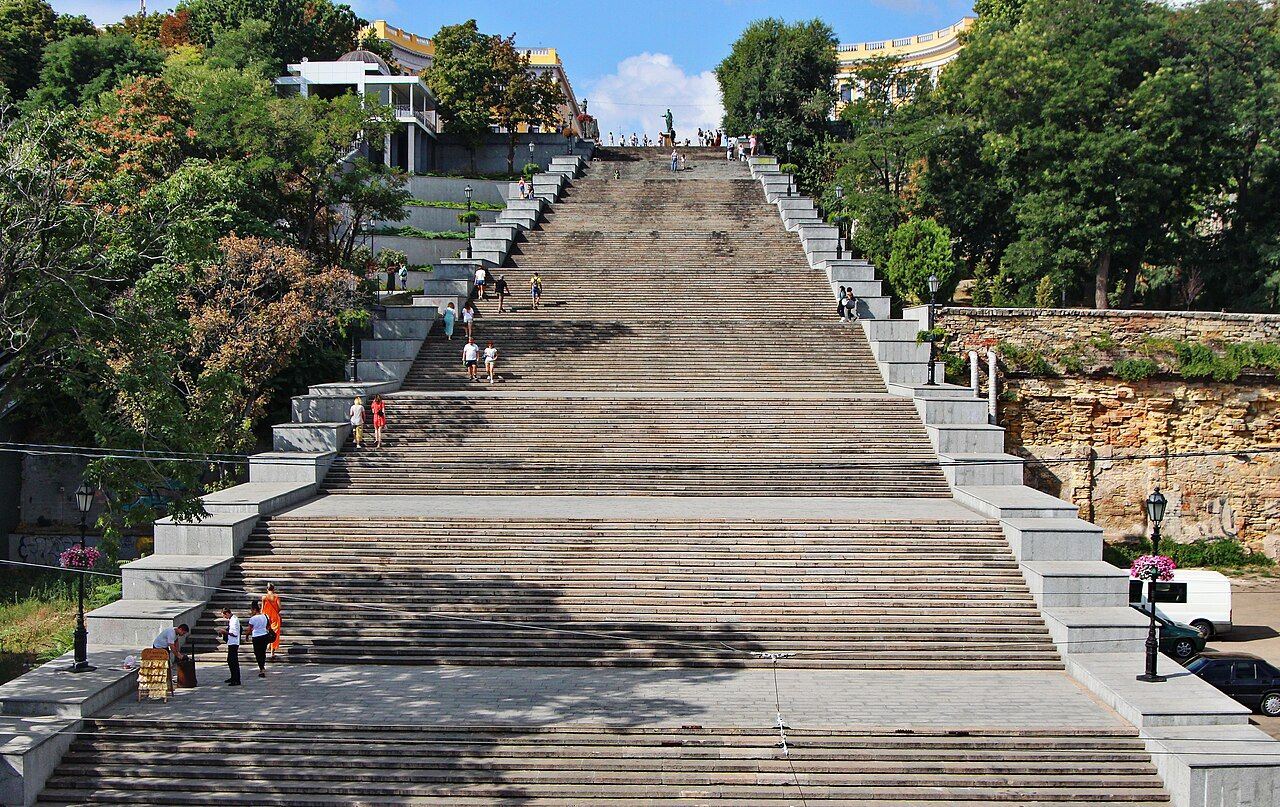
The stairs were built between 1837 and 1841 to link the city on the cliff with the harbour below, replacing a muddy track down the slope. They are a piece of deliberate theatre. There are ten flights, and the stairway is much wider at the bottom than at the top, so that from the foot it looks longer and steeper than it is, while from the top you see only the landings and none of the steps. The original two hundred steps became 192 when the shore below was extended.
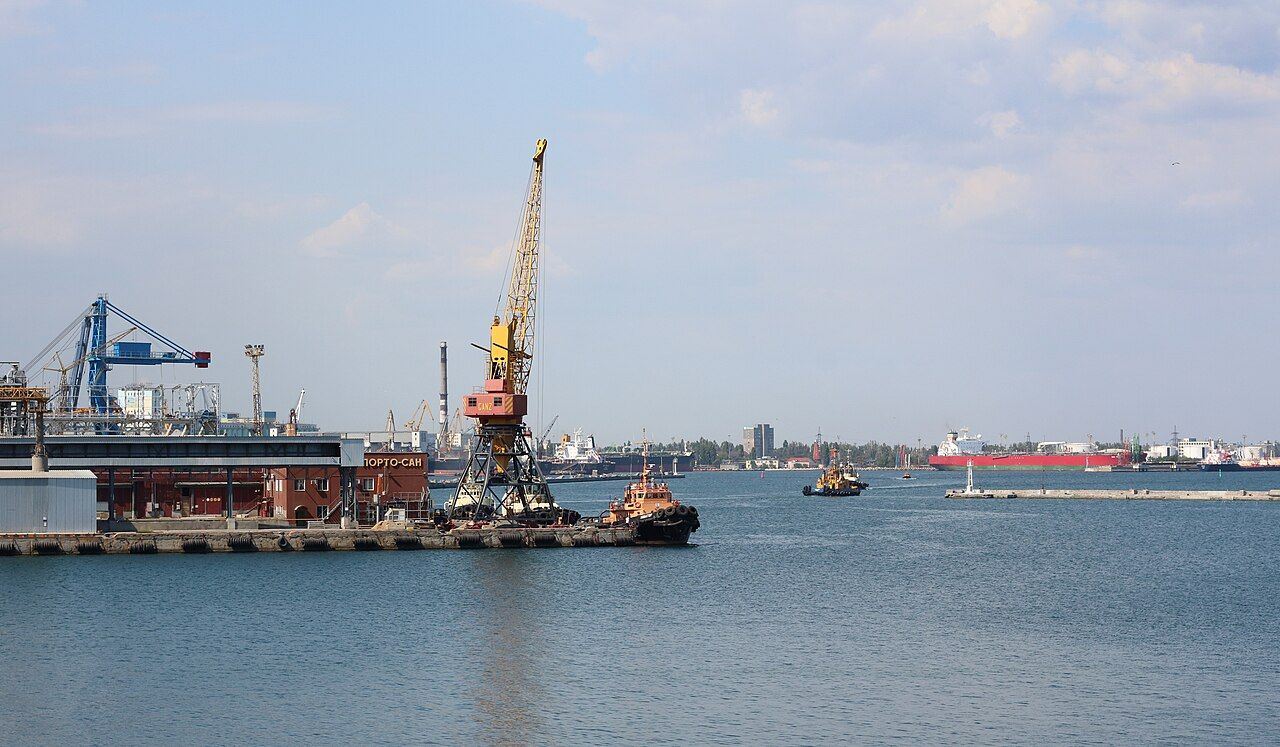
They took their best-known name from the battleship Potemkin, whose crew mutinied in 1905 and brought the ship into Odesa. Sergei Eisenstein's silent film of 1925 staged its most famous scene on the stairs, a massacre of civilians by soldiers marching down the steps, with a pram bouncing away down the flights. The scene is invented, but it made the stairs one of the most recognisable places in the history of cinema. For generations of sea travellers, though, they were simply the way into the city: you came off the ship at the passenger terminal at the foot and climbed into Odesa, with the Duke waiting at the top. From the top, the view runs straight down the flights to the terminal roof and the harbour, with the breakwaters, the cranes of the cargo port and the open sea beyond.
They are a piece of deliberate theatre.
The Duke and the boulevard
The Duke is Armand-Emmanuel du Plessis, Duc de Richelieu, a French aristocrat who fled the Revolution, entered Russian service and governed Odesa from 1803 to 1814. He is remembered as the man who turned a raw frontier settlement into a city, and his bronze statue, set up in 1828, stands at the head of the stairs in Roman dress, one arm stretched towards the sea. Odesans have long called him simply the Duke.
From the statue, Prymorskyi Boulevard runs along the cliff top in both directions, a broad avenue of plane and chestnut trees with benches facing the harbour and a row of nineteenth-century buildings on the landward side. At its western end stands the Vorontsov Palace, built in the 1820s for another of the city's governors, with a curved white colonnade on the cliff edge that looks out over the port. The view from the colonnade takes in the whole harbour, the breakwaters and the lighthouse at the end of the outer mole, named for the same Vorontsov family. A short funicular runs beside the stairs for those who prefer not to climb.
The Opera House
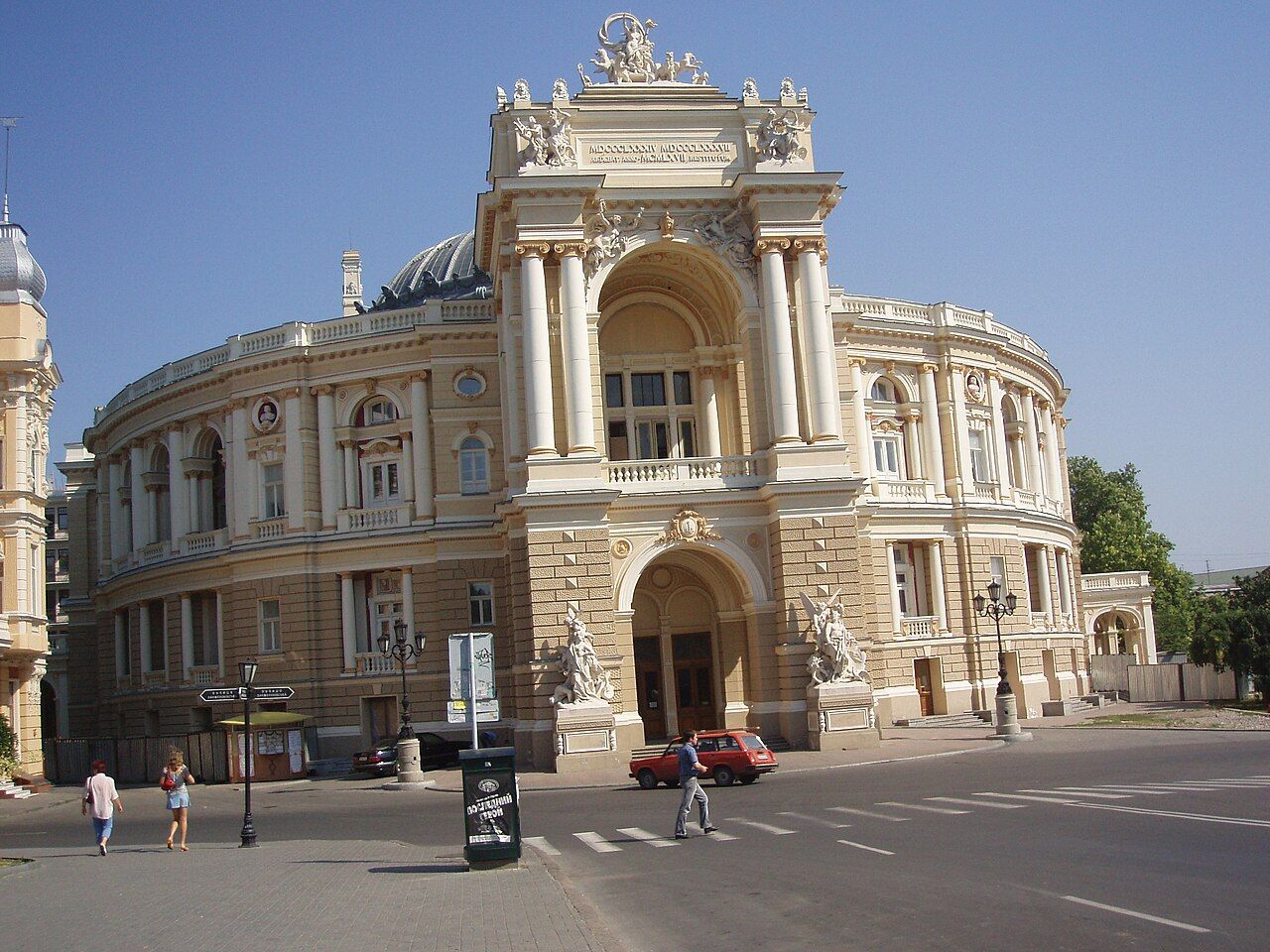
A few minutes inland from the boulevard stands the Odesa Opera and Ballet Theatre, the city's proudest building. The first theatre on the site burned in 1873, and its replacement, designed by the Viennese architects Fellner and Helmer, opened in 1887. It is a horseshoe of a building, curved and richly sculpted in the Viennese Baroque manner, with a lavish gilded auditorium inside. For passengers on a day ashore, an evening performance at the opera was long one of the reasons to choose an itinerary that stayed overnight.
The streets around it, Derybasivska and its neighbours, were the heart of the city's cafe life, lined with grand apartment buildings, arcades and courtyards. Behind the facades, the courtyards and stairwells of the old centre were where Odesans actually lived, and much of the city's character was found there. Nearby, the Passage, a glass-roofed shopping arcade from around 1900 crowded with sculpture, was one of the showpieces of the merchant city at its most prosperous.
The sea's great passenger port
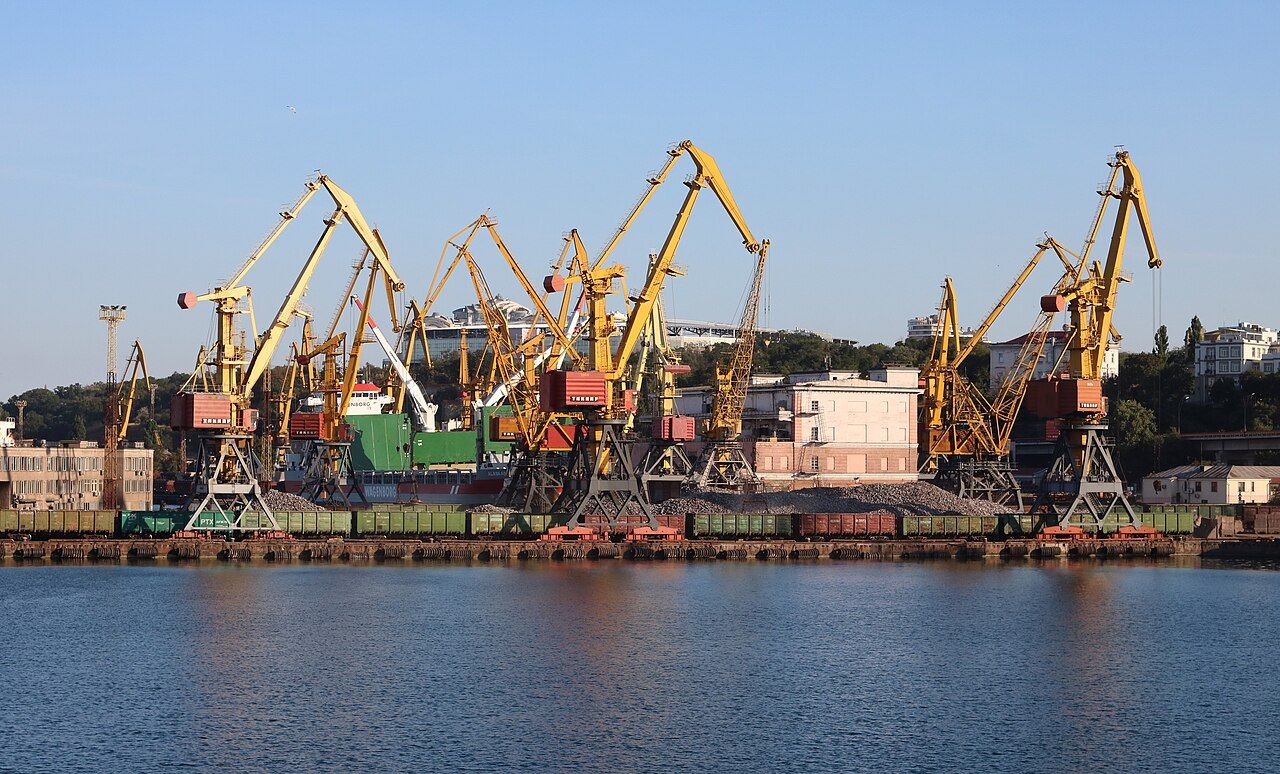
From the nineteenth century onwards, Odesa was the busiest passenger port on the Black Sea. Steamers ran from here to the Crimean and Caucasian coasts, to Istanbul, to the Danube and the Mediterranean, and in the Soviet era the port was home to passenger lines that ran around the sea and further afield. After 1991 it became a regular port of call on Black Sea cruise itineraries, sometimes with an overnight stay, and the modern passenger terminal at the foot of the stairs was built for them, with the city rising straight above it. The longer story is told in our short history of cruising the Black Sea.
Calls became fewer after 2014, and they stopped altogether in 2022. The war has since damaged buildings in the historic centre and across the city, and the port has worked under attack. When and how ships might return is not something anyone can predict. For the coasts that ships do usually call at today, see our stories on Constanța, to the south-west, and on the Danube delta at Sulina.
More ports on this coast: Odesa and the north.