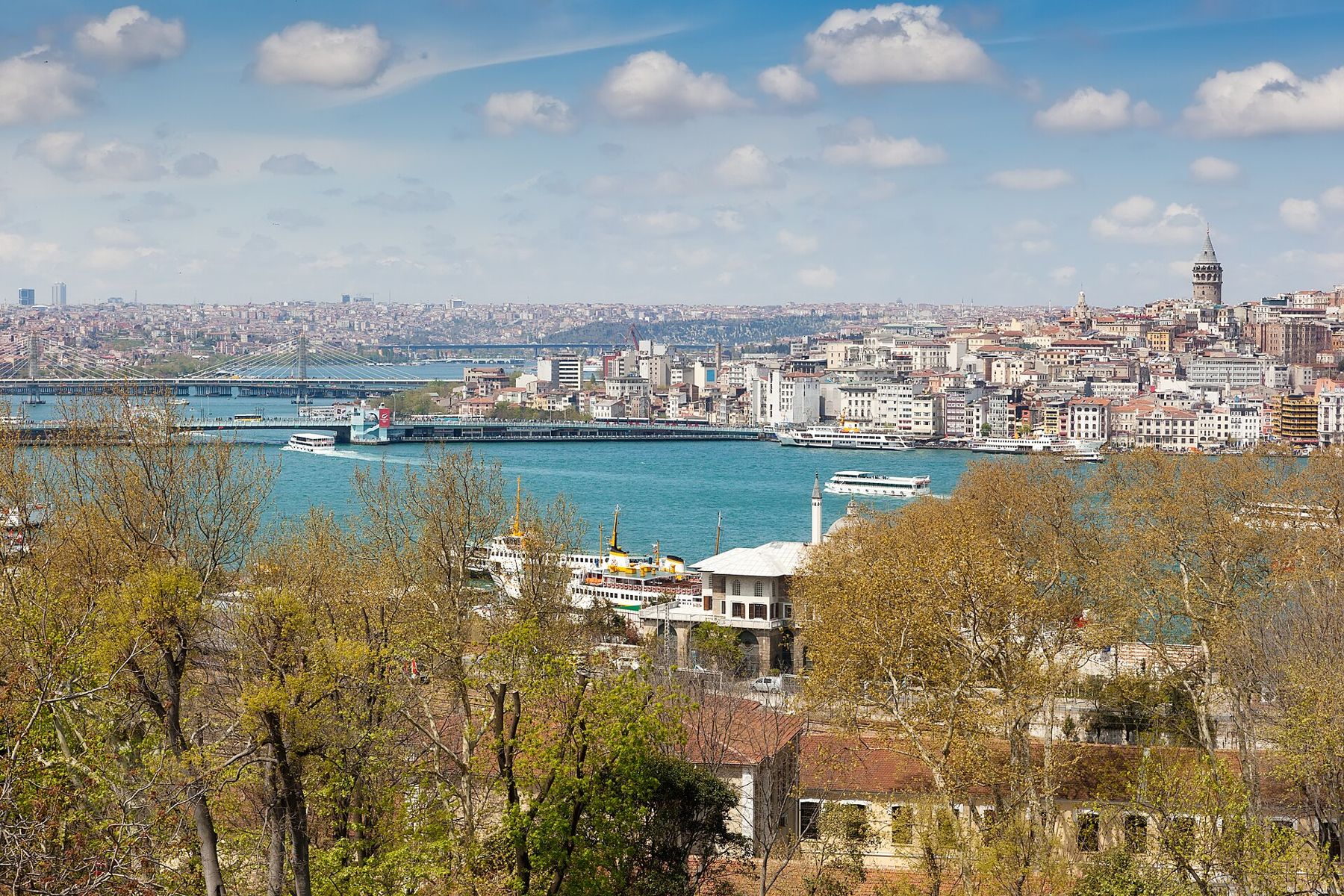
Ships calling at Istanbul usually tie up on the European side at Karaköy, on the north bank of the Golden Horn where it meets the Bosphorus. The cruise terminal here was rebuilt in recent years, with passenger halls set underground and a public promenade above, so you step out not into a cargo yard but straight into one of the city's oldest harbour districts. Within ten minutes on foot you can be on the Galata Bridge, climbing towards the Galata Tower or on a tram heading for the old city. A day here is about choosing, not covering.
The waterfront at Karaköy
Karaköy was the port quarter of Galata, the walled Genoese town of the Middle Ages, and later the street where the city's banks and shipping offices gathered. Just behind the waterfront, the old banks street keeps its heavy stone façades from the last Ottoman decades. The Kamondo Stairs, a curving double flight in Art Nouveau style built for a banking family in the nineteenth century, climb from it towards the tower. Istanbul Modern, the city's museum of modern and contemporary art, stands on the waterfront beside the terminal, which makes it the easiest museum visit of the day if rain sets in.
Up to the Galata Tower
You will have seen the Galata Tower from the ship: a round stone shaft with a conical cap, built by the Genoese in the fourteenth century as part of Galata's defences and later used as a fire watchtower. The walk up from the waterfront is short but steep, through lanes where small shops sell musical instruments and lamps. Inside, a lift and stairs reach a narrow balcony that runs right round the top, and from it the Golden Horn, the old city, the mouth of the Bosphorus and the Asian shore all lie open at once. Entry is ticketed and the queue can be long in summer, so go early or settle for the view from the square below.
From the tower, the busy pedestrian street of İstiklal is a few minutes further uphill. To save your legs on the way back down, take the Tünel, a short underground funicular opened in 1875 and one of the oldest underground railways in the world, which runs between the top of the hill and Karaköy.
Across the Galata Bridge
The Galata Bridge crosses the mouth of the Golden Horn from Karaköy to Eminönü. The present bridge, opened in 1994, is the latest of several on this spot. Its upper deck carries the road and the tram and is lined with anglers whose lines hang down past the awnings of the restaurants on the lower level. Walking across takes about a quarter of an hour at an easy pace and gives you some of the best free views in the city: ferries backing out of the Eminönü piers, gulls riding the wind off the water, the domes of the New Mosque ahead and the Süleymaniye Mosque on its hill to the right.
The Golden Horn
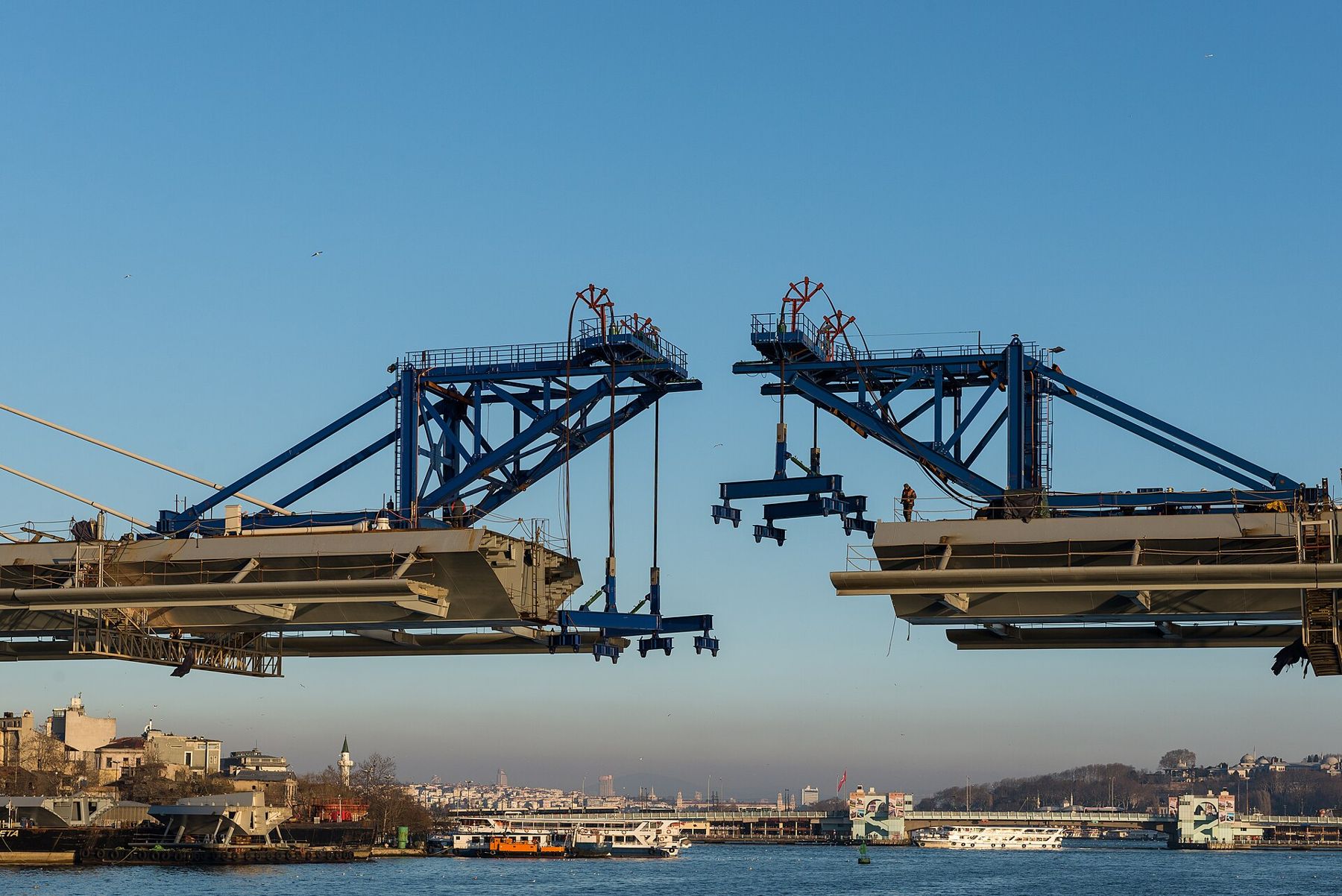
The Golden Horn, Haliç in Turkish, is a curved inlet that runs several kilometres inland from the Bosphorus, and it served as the city's sheltered harbour for most of its history. Upstream of the Galata Bridge the Golden Horn Metro Bridge, opened in 2014, carries the metro across the water with a station set halfway over the inlet; the platforms give a fine, quiet view back towards the tower and the old city. Further up, the shores turn residential and green, and boats run up the Horn towards Eyüp if you have the time.
The old city, in outline
At the Eminönü end of the bridge stand the New Mosque and, beside it, the Spice Bazaar, a covered market of the seventeenth century. The T1 tram, which stops at Karaköy, crosses the bridge and climbs to Sultanahmet, where Hagia Sophia, the Blue Mosque and the Topkapı Palace lie within a few hundred metres of one another. Each deserves hours, and on a port day you will do better to choose one than to queue at all three. The Grand Bazaar is a short walk or one more tram stop beyond.
For mosque visits, cover shoulders and knees, women cover their hair, and shoes come off at the door. Visitors are usually asked to stay out during prayers, especially at midday on Fridays, so plan around prayer times, which shift through the year.
Getting around and getting back
Trams, the funicular and the ferries take a rechargeable transit card sold from machines at the main stops. Traffic on the waterfront roads is slow at most hours, and the tram is often quicker than a taxi. Keep your passport or the identity document your ship asks for, as you will need it to pass back through the terminal.
Give yourself a wide margin before all-aboard time: the bridge and the tram are crowded in the late afternoon, and the Sultanahmet stops can be packed. Istanbul has been the gateway port for passengers bound for the Black Sea since the age of steam, as our short history of Black Sea cruising explains, and the best part of the day may still be ahead of you: if your ship leaves northbound, read our notes on the passage up the Bosphorus and be on deck when the lines come in.
More ports on this coast: The Bosphorus gate.