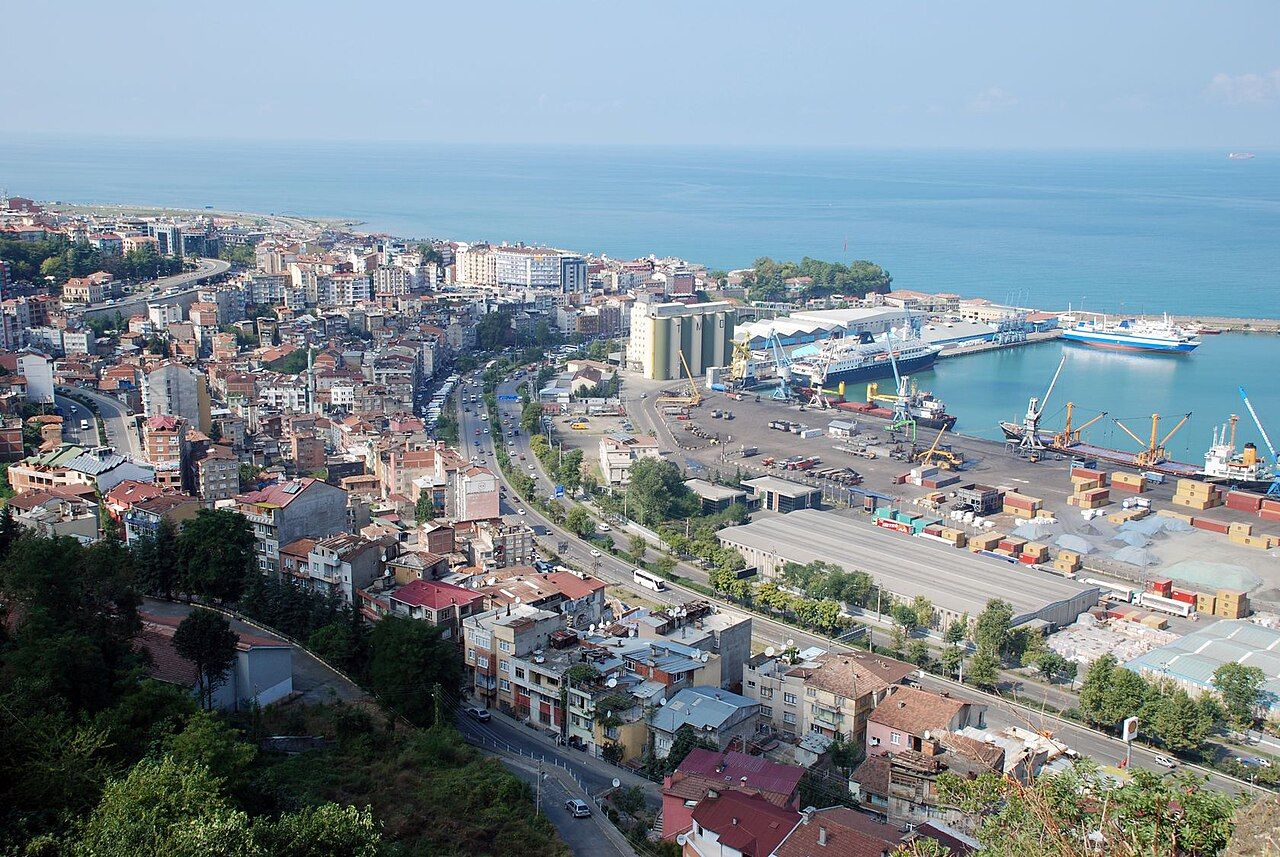
Trabzon is the largest city on Turkey's eastern Black Sea coast, and it has been a port for a very long time. Greek colonists from Sinope founded Trapezous here, traditionally in the eighth century BC, on a flat-topped spur of rock between two ravines whose table-like shape is said to have given the place its name. Later it was Trebizond, capital of a Byzantine successor empire that outlived Constantinople by eight years, and then an Ottoman port at the head of the caravan road to Persia. The city that greets a ship today is modern, hilly and busy, but the old layers show through if you know where to look, and an hour's drive inland lies one of the most dramatic religious buildings in Turkey.
Trebizond on its table of rock
Ships calling here usually berth in the commercial port just east of the centre, a short taxi ride or a longer walk from Meydan, the main square, with its park, tea gardens and traffic. From the square the old walled city lies to the west. Its heart is the narrow plateau between the two ravines, now crossed by bridges, with the citadel at its upper end. The walls were rebuilt and extended many times between Roman and Ottoman days, and stretches of them still run along the ravine edges, with houses built against and into them.
Inside, the Ortahisar Fatih Mosque was once the church of the Panagia Chrysokephalos, the "golden-headed" Virgin, the main church of the Byzantine city; the building keeps its cross plan beneath later changes. The streets around it are working streets, not a preserved quarter, and the pleasure is in noticing a tower, a gate or a reused column between shopfronts. For a view of the whole city and the sea, take a taxi up to Boztepe, the hill behind the centre.
The empire of Trebizond was founded in 1204, in the same weeks that crusaders sacked Constantinople, by members of the Komnenos dynasty, and it lasted until the Ottoman conquest of 1461. For more than two and a half centuries it lived on trade, sitting at the sea end of routes from Persia and Central Asia, and on careful diplomacy with its larger neighbours; Venetian and Genoese merchants kept trading stations here. Its wealth became a byword in the West, and the city's name still carries a faint glamour in European literature. Trabzon's food is worth a pause too: hamsi, the Black Sea anchovy, fried or baked with cornmeal in the cooler months, and the butter-rich dishes of the eastern coast.
Hagia Sophia above the sea
Trabzon's Hagia Sophia stands on a terrace above the shore a few kilometres west of the centre. It was built in the mid-thirteenth century, when the Komnenian emperors ruled from Trebizond, and it is a compact domed church with three porches, the southern one framed by a carved stone frieze telling the story of Adam and Eve. A tall separate bell tower, added in the fifteenth century, stands to the west. The site is small, and the setting, with lawns, the sea below and the coast road beyond, adds a good deal.
The frescoes are the reason to come. Painted soon after the church was built, they were plastered over when the building became a mosque under the Ottomans and uncovered again in the twentieth century, when it was restored and opened as a museum. Since 2013 it has been used once more as a mosque. Visiting is arranged around prayer times, parts of the interior painting may be screened or covered, and modest dress is expected, with a scarf for women.
The frescoes are the reason to come.
The Atatürk Pavilion and the hills
On the green slopes of Soğuksu, south-west of the centre, the Atatürk Pavilion is a white mansion from around 1900, built for a wealthy Trabzon banking family in a style borrowed from the Crimean summer houses of the day. It was presented to Atatürk, who stayed there in 1937, and it is now a museum with period furniture, photographs and a formal garden. It is a pleasant half hour, and a reminder of the merchant wealth the port once handled.
Most passengers with a full day, though, use it for Sümela, and the pavilion fits only if your ship stays late. The drive inland takes about an hour each way, the visit at least two hours, and the road is shared with heavy tour traffic in summer. Allow for all of that before planning anything else.
Into the Altındere valley
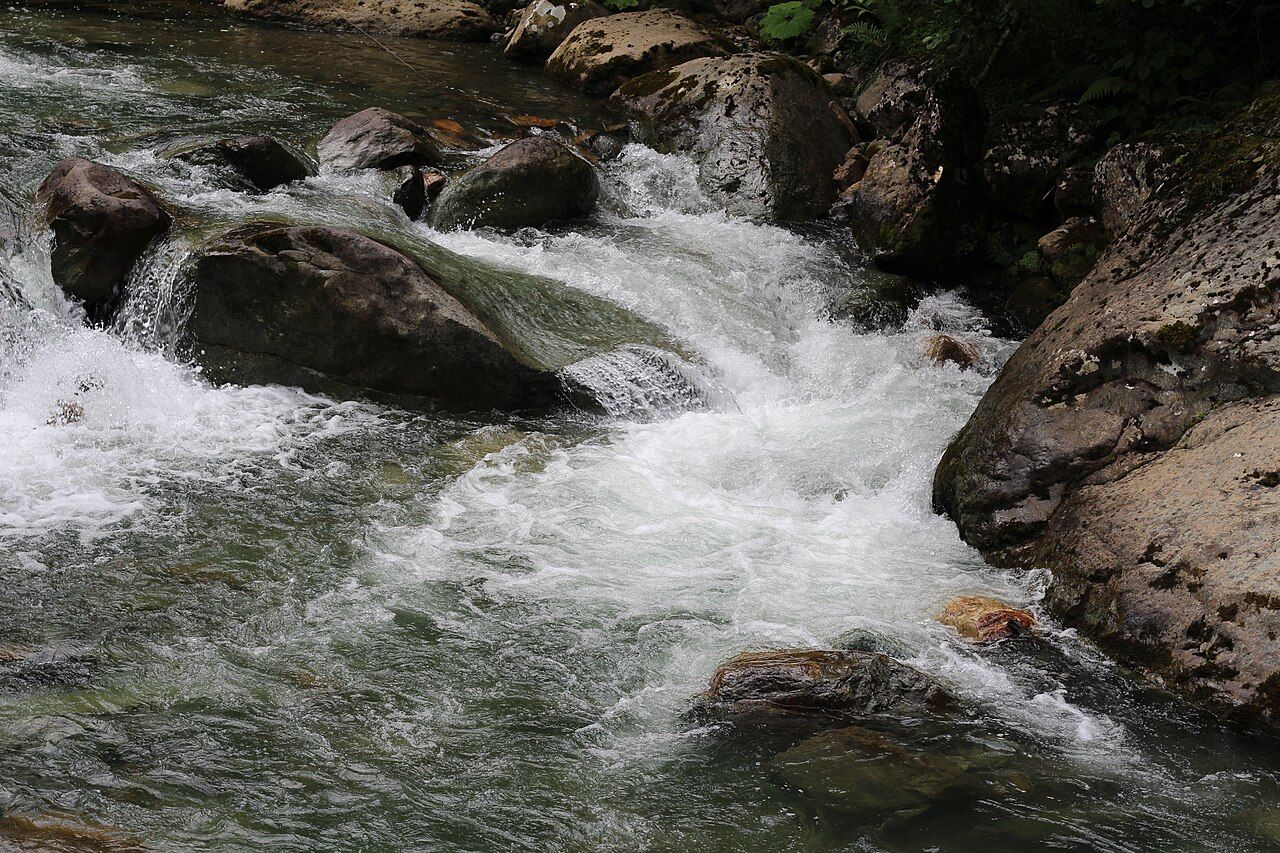
The road to Sümela climbs south from the coast through the town of Maçka and into the Altındere valley, now a national park. The valley is steep, narrow and thickly wooded, the slopes dark with fir, beech and spruce, and the cloud often sits halfway down the ridges even on a clear day at the coast. A stream runs along the floor. From the car park and visitor area near the bottom, a path climbs through the forest towards the monastery; depending on current arrangements, a shuttle may take you part of the way up, and the final stretch is always on foot, with steps.
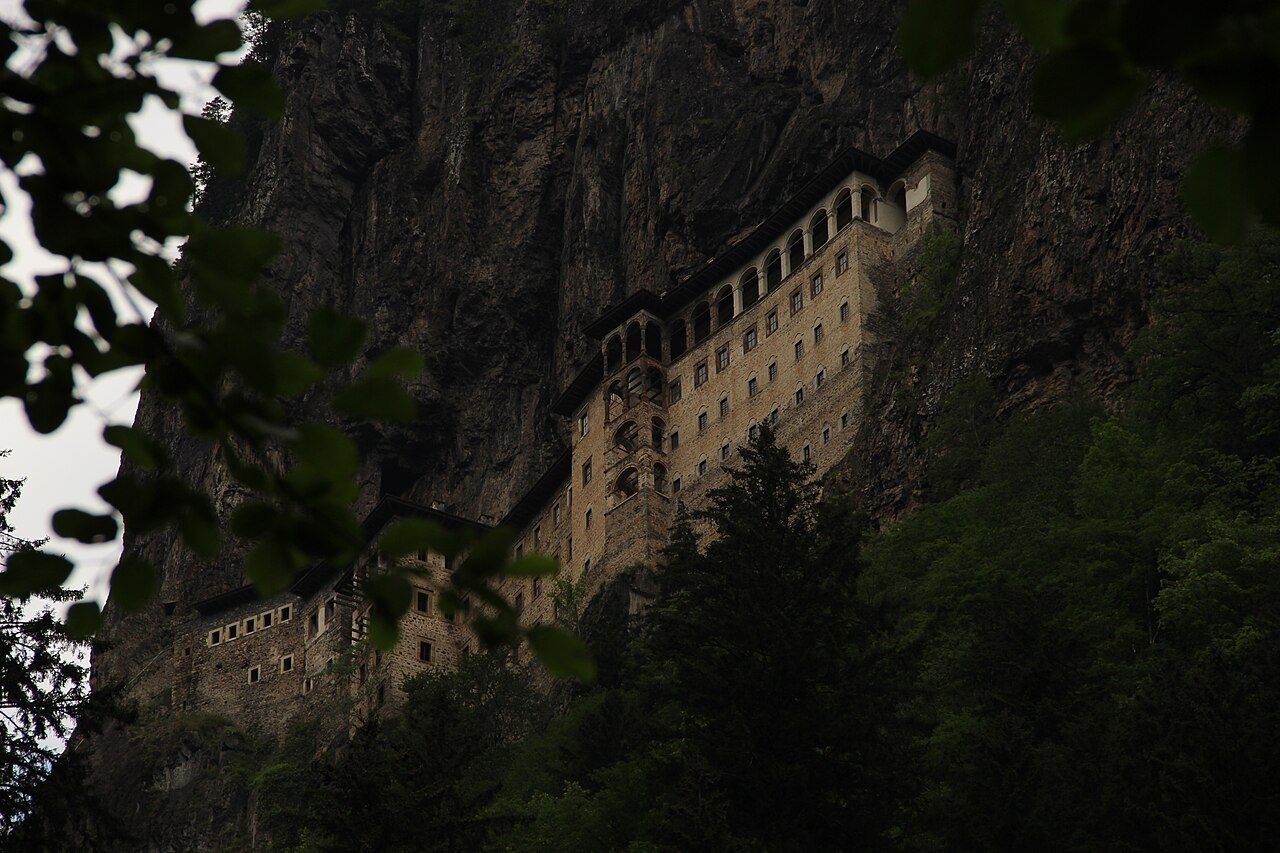
The first sight of the monastery comes from below, through the trees: a cluster of pale buildings set into a vertical rock face, high above the valley floor, with nothing obvious holding it there. It is one of those views that photographs never quite manage.
Sümela on its cliff
Tradition holds that two monks from Athens founded the Monastery of the Virgin of Sumela in the fourth century, guided to a cave in the cliff by an icon said to have been painted by Saint Luke. What stands today is mostly much later, rebuilt and extended over the centuries, with the largest buildings from the nineteenth. The monastery was abandoned in 1923, when the Greek Orthodox population of the region left in the exchange of populations between Greece and Turkey.
Inside the walls you climb through courtyards to the rock church, the original cave sanctuary, whose walls inside and out are covered with frescoes in several layers, many scratched by later visitors. Long stretches of the site have been closed for restoration in recent years, because of the danger of rockfall from the cliff above, and parts may be closed again when you visit. When it is open, the monastery is laid out on several levels along a ledge: a long nineteenth-century range of cells and guest rooms raised on arches against the cliff, the remains of an aqueduct that once brought water from the mountain, a small chapel beside the rock church, and outer walls from which the view drops straight to the treetops far below. On 15 August, the feast of the Dormition, an Orthodox service has been permitted in some years, and the valley is then very crowded. Back on the coast, the tea country of Rize lies to the east, while to the west the shore runs on towards Amasra and the Bosphorus.
More ports on this coast: Turkey's northern shore.