Sozopol sits on a narrow rocky headland on the southern stretch of the Bulgarian coast, with the town's oldest streets packed onto the tip and two small islands lying just offshore. It is one of the oldest towns on this coast and still one of the most rewarding to walk, provided you avoid the busiest hours of high summer. For most cruise passengers it is a half-day from Burgas rather than a port of its own.
Arriving from Burgas
Large ships rarely anchor off Sozopol itself. Ships calling at this part of the coast usually berth at Burgas, about 35 kilometres to the north, and Sozopol becomes a coach trip or a ride by local bus or taxi down the shore road, roughly three-quarters of an hour each way depending on traffic. Smaller ships sometimes anchor in the bay and bring passengers ashore by tender to the fishing harbour. Either way, the old town is compact, and three or four hours on foot covers it well. Our guide to Burgas and its salt lakes covers the port city and the lagoons around it.
Apollonia on the headland
Greek settlers from Miletus, on the Aegean coast of Asia Minor, founded a colony here around the end of the seventh century BC and called it Apollonia, after Apollo. It grew rich on trade across the Black Sea, minted its own coins and became known for a colossal bronze statue of Apollo, said to have stood some thirteen metres high, which ancient writers record as being carried off to Rome as a trophy in the first century BC. Later the town took the name Sozopolis, the city of salvation, from which the modern name comes.
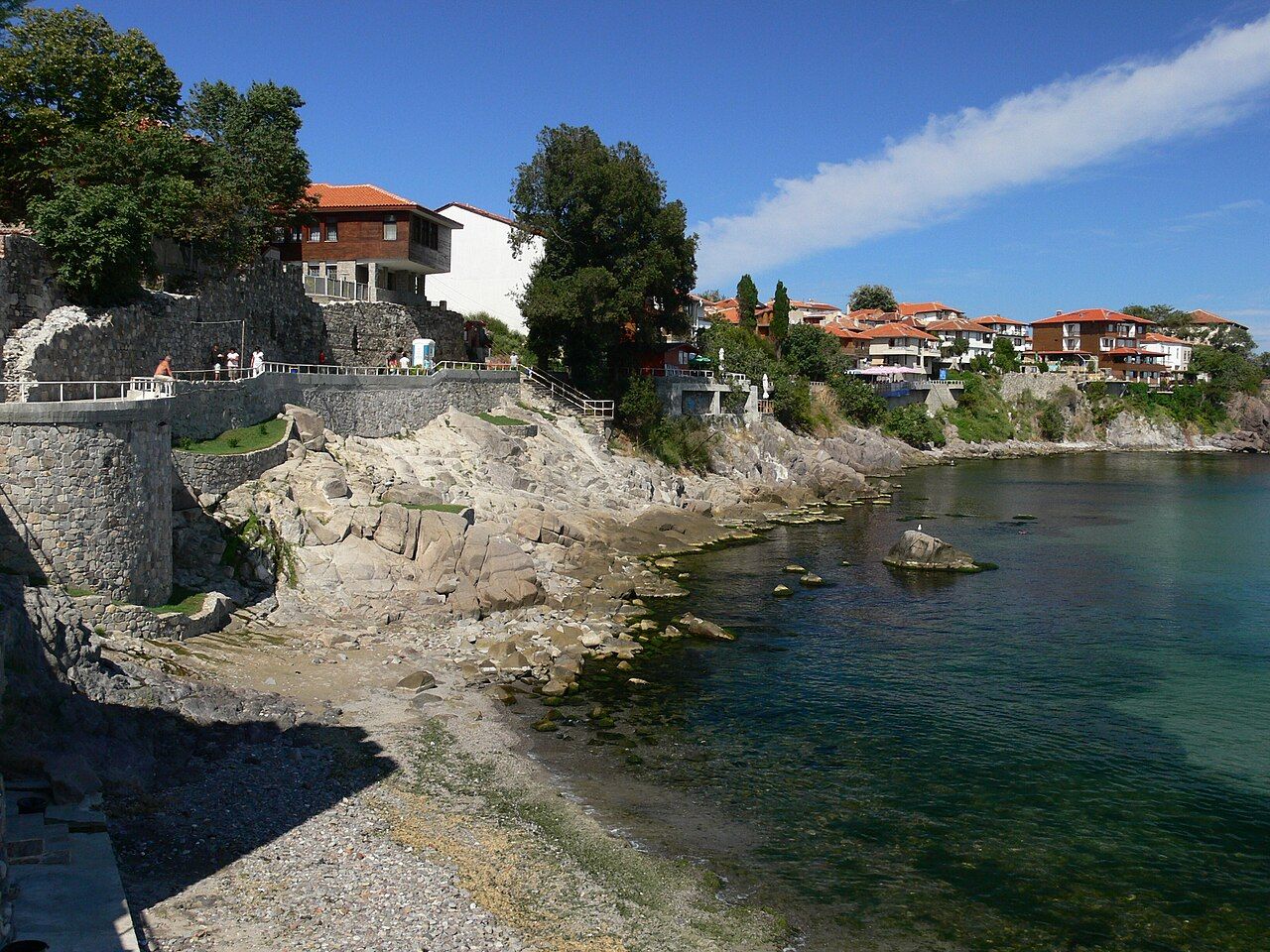
Little of the Greek city stands above ground, because the later town was built directly on top of it. What you see are fragments: foundations exposed in excavated plots, stretches of the medieval fortress wall reconstructed along the southern edge of the old town, and finds in the archaeological museum near the harbour, where painted Greek pottery from the town's cemeteries is the highlight.
The wooden houses
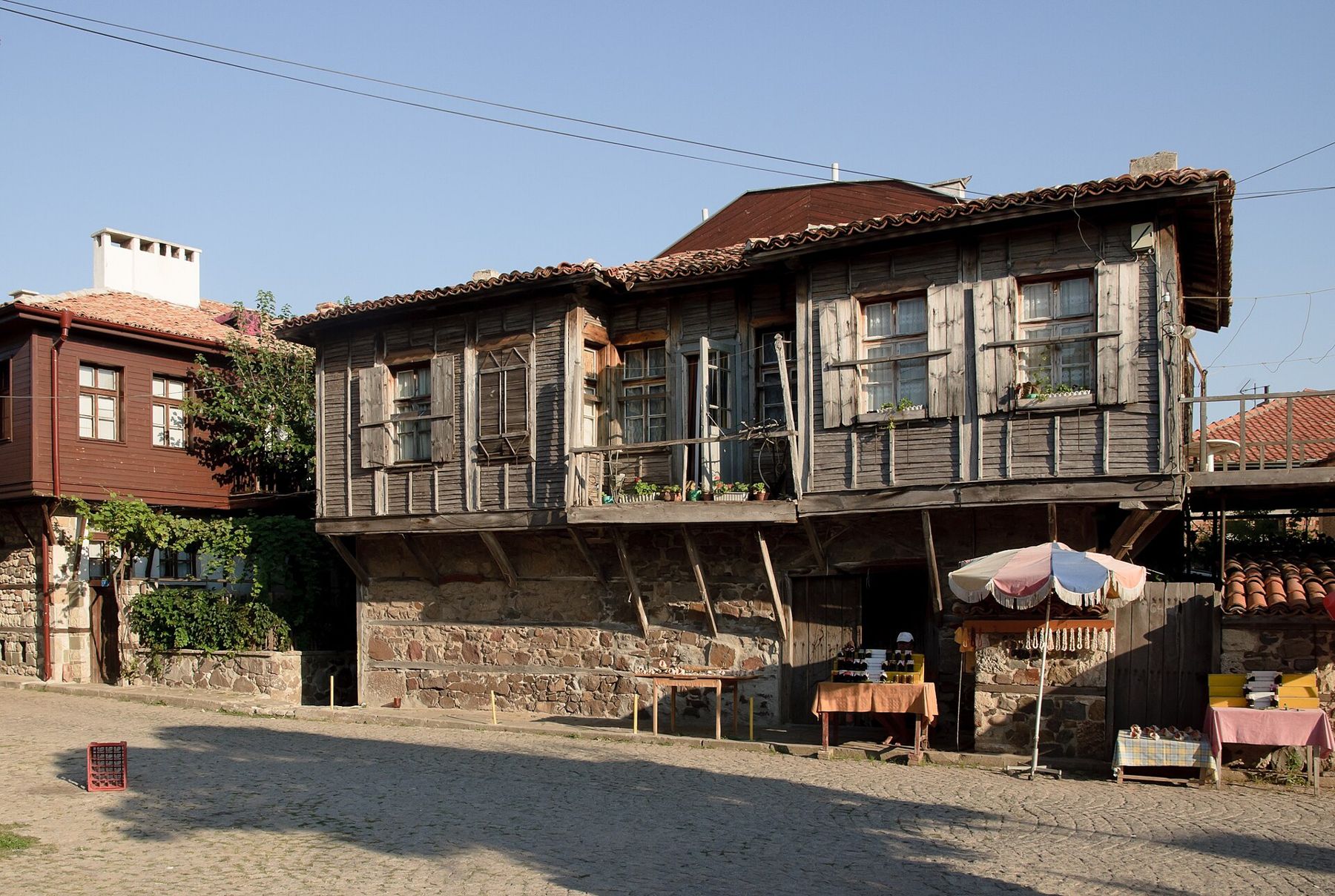
The old town is a protected architectural reserve, and its character comes from houses built mostly in the eighteenth and nineteenth centuries. They follow a pattern you will soon recognise: a ground floor of rough stone, often half sunk into the slope, and a timber upper floor that juts out over the street on wooden brackets, its boards weathered grey or stained brown, with shutters, small balconies and tiled roofs above. Many are still lived in, with vines over the doorways and pots of geraniums on the sills, and in summer the lower rooms open as small galleries and stalls.
Walk the cobbled lanes towards the tip of the headland, where the streets end at a low cliff path above the sea. The views north across the bay towards Burgas and south along the coast are best in the morning, before the heat and the crowds build. The small churches of the old town, several with fine carved wooden iconostases, keep irregular hours; if one is open, step in.
St Ivan and the islands
From the headland you look straight across at the island of St Ivan, the largest island on the Bulgarian coast, with the smaller St Peter beside it. On St Ivan stand the ruins of a medieval monastery and a lighthouse. In 2010 archaeologists working at the monastery found a small reliquary holding bone fragments that tradition links to St John the Baptist; they are now kept in a church in Sozopol, and the attribution remains a matter of faith and debate rather than settled fact.
The island is also a nature reserve, important for nesting seabirds, and landing is restricted. Boat trips from the fishing harbour usually circle the islands rather than put you ashore.
Beaches and the coast south
The newer part of Sozopol, across the neck of the headland, is a busy resort of hotels and apartments with little of the old town's character, but it holds the bus station and the long main beach. Walk through it quickly and save your time for the headland.
Sozopol has sandy beaches on both sides of town, crowded in July and August and pleasant in early summer and September, when the water is still warm. South of Sozopol the coast grows wilder, with wooded hills and small coves running towards the Strandzha mountains and the Turkish border. The Ropotamo river reserve, with its reed-fringed river mouth and dune forest, lies a short drive south and makes a good addition if you have a full day rather than a few hours. For the busier old town further up the coast, see our guide to Nesebar on its peninsula.
Cobbles, shade and the euro
The cobbles of the old town are uneven and slippery when wet, so wear flat shoes. Shade is scarce on the headland at midday. Bulgaria has used the euro since the start of 2026, and card payment is widely accepted in the town, though small kiosks and some beach stalls may prefer cash. The fishing harbour is worth a few minutes at the end of the day, when boats come in and the nets are laid out to dry along the quay. Allow time for the road back to Burgas, which can slow badly on summer afternoons, and keep a margin before all-aboard. If your ship sails north up the coast, our guide to Varna and its Sea Garden covers the next large port.
More ports on this coast: Bulgaria and Romania.