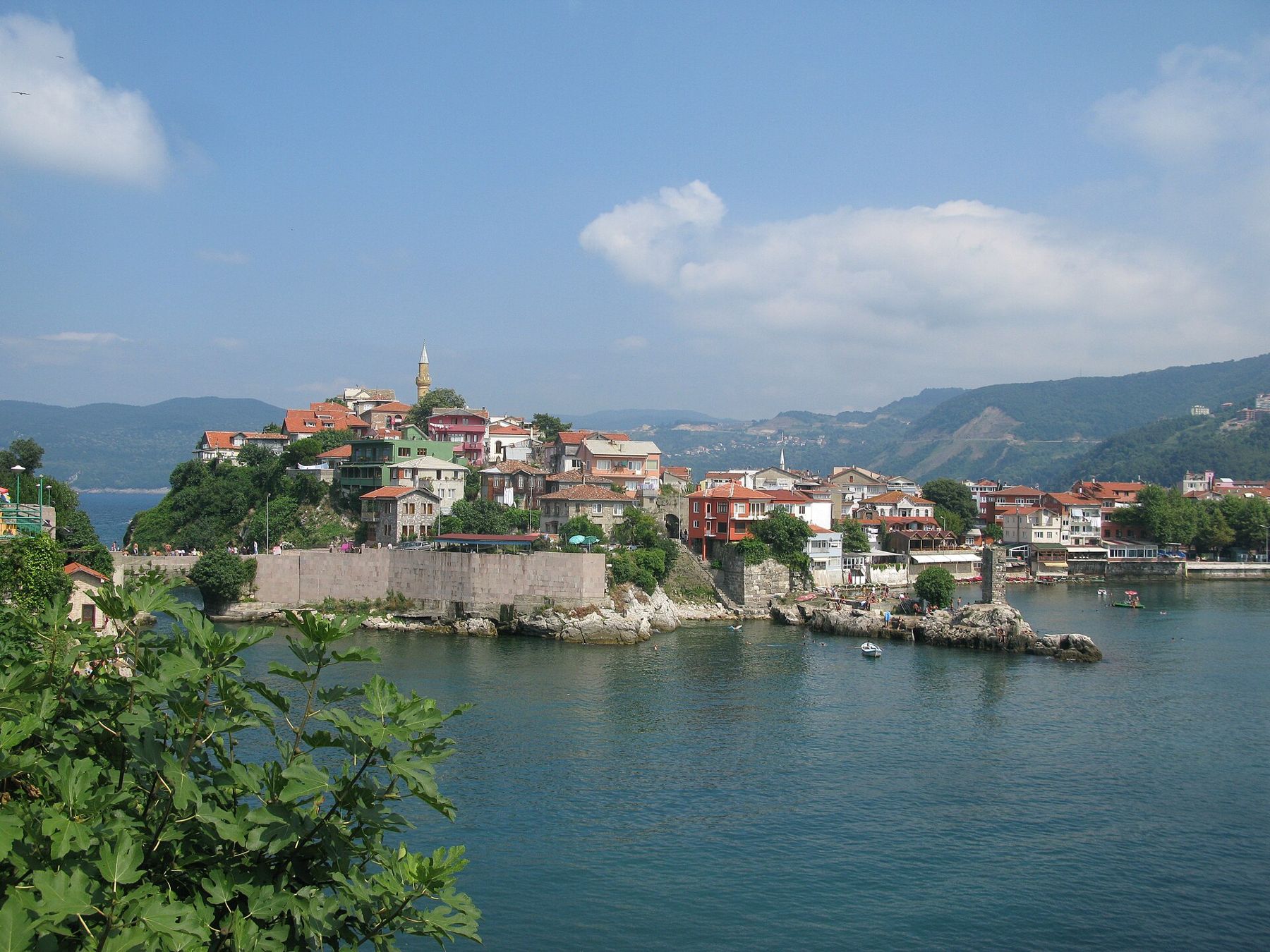
Amasra is a small town on a rocky peninsula on Turkey's western Black Sea coast, with a harbour opening on either side of it and an island tied to its tip by an old arched bridge. Inside its walls, the streets are narrow and steep, the houses are painted in warm colours, and the sea is never more than a minute away. It receives few ships, and that is part of its appeal.
Two harbours and a peninsula
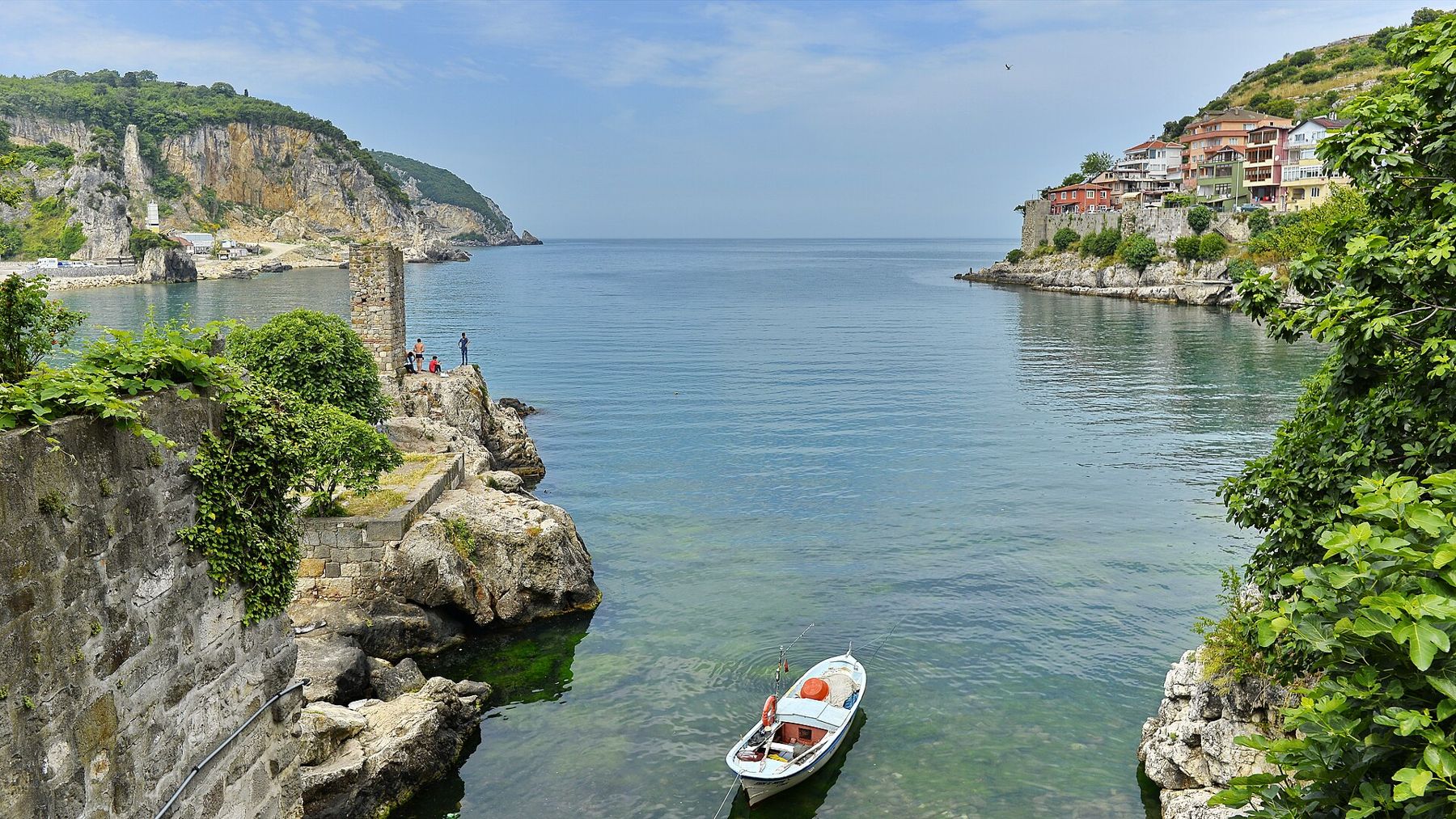
The town takes its shape from the sea. The peninsula divides the water into two bays: the Big Harbour, Büyük Liman, broad and open, with a small island called Tavşan Adası lying in it, and the Small Harbour, Küçük Liman, tighter and more sheltered, lined with fishing boats. You can walk from one to the other in five minutes across the neck of the peninsula, which makes Amasra one of the few places where you can watch the sun rise over one harbour and set over the other without moving far.
Ships calling here, when they do, are small and usually anchor in the bay and bring passengers ashore by tender to the quay; conditions on the open sea can affect landing.
The walls
The old quarter, known simply as the castle, Kale, is enclosed by walls built on Byzantine foundations and strengthened by the Genoese, who held Amasra as a trading post in the later Middle Ages before it passed to the Ottomans under Mehmed II in 1460. Look for the carved coats of arms set into some of the gates and towers, reminders of the Genoese years. The walls run right round the peninsula and you can follow long stretches of them, with the sea crashing on the rocks below on the north side and lying calm in the harbours on the south.
The town is far older than its walls. As the Greek settlement of Sesamos it was already trading here centuries before Christ, and it was refounded around 300 BC by Amastris, a Persian princess who ruled the nearby city of Heraclea and gave the town the name it still carries in modified form. Inside the walls, the Fatih Mosque was a Byzantine church before the Ottoman conquest, and its plain stone shape still shows it.
Across the Kemere bridge to Boztepe
At the tip of the peninsula, the Kemere bridge crosses a narrow channel to Boztepe, a larger, rockier island that is part of the old town. The bridge, a single stone arch over the water, is usually dated to the Roman or Byzantine period and has been much repaired since. It is short, but crossing it is one of the small pleasures of Amasra: the sea moves restlessly through the channel beneath you, and the view opens out on both sides.
Boztepe has more walls, a small former church that later served as a mosque, quiet lanes of houses and a high point at the far end with views over the open sea. Walk to the end for the view back over the walls, the two harbours and the wooded hills inland.
In the town
Between the harbours, the modern town is a few streets of houses, fish restaurants and tea gardens, and a market street where woodcarvers sell spoons, boxes and kitchen tools, a craft the town has long been known for. The Amasra Museum, near the Small Harbour, displays finds from the ancient town, including Roman sculpture and inscriptions. Its hours vary with the season. Fish from the Black Sea, grilled simply, is the obvious thing to eat, with the local salad.
If you have time and a taxi, the hills above town repay a short drive. The road inland climbs through forest to viewpoints from which the whole peninsula is laid out below, the two harbours like a pair of lungs either side of the walls. Along the same road towards the provincial capital, Bartın, a rock-cut Roman roadside monument with a carved niche and inscription marks the line of an ancient road. Agree the price and the waiting time before you set off, and keep an eye on the clock.
The coast road
East of Amasra, the coast road follows one of the most dramatic shores in Turkey towards Sinop: hundreds of kilometres of wooded cliffs, small coves, fishing villages and hairpin bends, with the sea appearing and disappearing below. It is slow going and best travelled at leisure rather than squeezed into a port day, but even a short drive east of town shows you what the ship's rail can only hint at. Our guide to Sinop and its northern cape covers the far end of it, and Trabzon and Sümela the coast further east.
Rocks, lanes and the Big Harbour
Swimming is possible from the rocks and the small beach in the Big Harbour in summer, though the open-sea side can be rough. Amasra is small enough to see in three or four hours on foot, but the lanes inside the walls are steep and the cobbles uneven, so wear sensible shoes. Weekends in summer bring crowds from inland Turkish cities; weekdays and the shoulder months are calmer. The town lies roughly halfway between Istanbul and Sinop by sea, and if your ship came up from the south, our guide to sailing the Bosphorus covers the start of the voyage.
More ports on this coast: Turkey's northern shore.