From the deck at Batumi, the first thing you notice after the towers is the hills. They begin almost at the edge of the city and rise in ridge after ridge, dark with forest, often with cloud resting on them. This is Ajara, the autonomous republic of which Batumi is the capital, and most of it is mountain. A day inland takes you up a river valley to a medieval stone bridge and a waterfall, into one of the wettest forests in the Caucasus, and through villages that make wine and honey on the slopes. It is a full day, but not a hard one.
Up the Acharistskali valley
The main road inland leaves the coast just north of the Turkish border, near the mouth of the Chorokhi, and follows the Acharistskali river upstream to the east. The valley narrows quickly. Within a few kilometres the city is gone, and the road runs between steep wooded slopes, with the river below, fast and greenish-grey, and villages strung along the sunnier side. Houses are often of timber on stone bases, with balconies and fruit trees, and in season the roadside stalls sell honey, fruit, cheese and churchkhela, the walnut sweets threaded on string and dipped in grape juice.
The road continues far into the mountains, past the town of Keda and on to Khulo and the high pass at Goderdzi, but that is a different and much longer trip. For a port day, the lower valley holds plenty.
The Makhuntseti waterfall
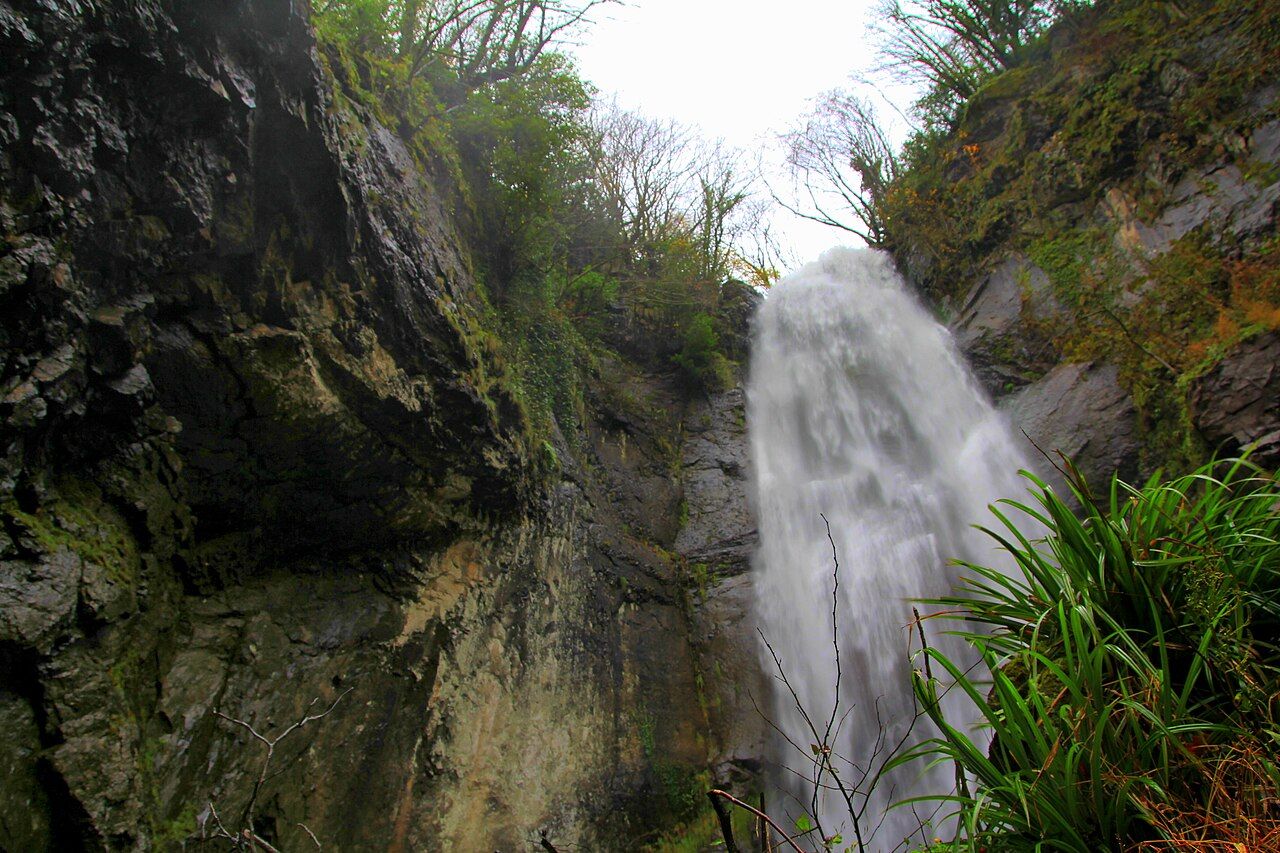
About thirty kilometres from Batumi, close to the village of Makhuntseti, a stream drops over a dark rock face into a pool beside the road. The Makhuntseti waterfall is a fall of around twenty metres, not tall by mountain standards, but it is full and noisy after rain, and the spray cools the air around it on a hot day. Steps lead up to a viewing point near its foot. It is one of the most popular stops in the valley, and on summer weekends it is busy with local families as well as visitors.
Below the fall, by the roadside, you will find stalls and small places to eat. Stay for the water and the green walls of the gorge, then walk on to the bridge.
The Queen Tamar bridge
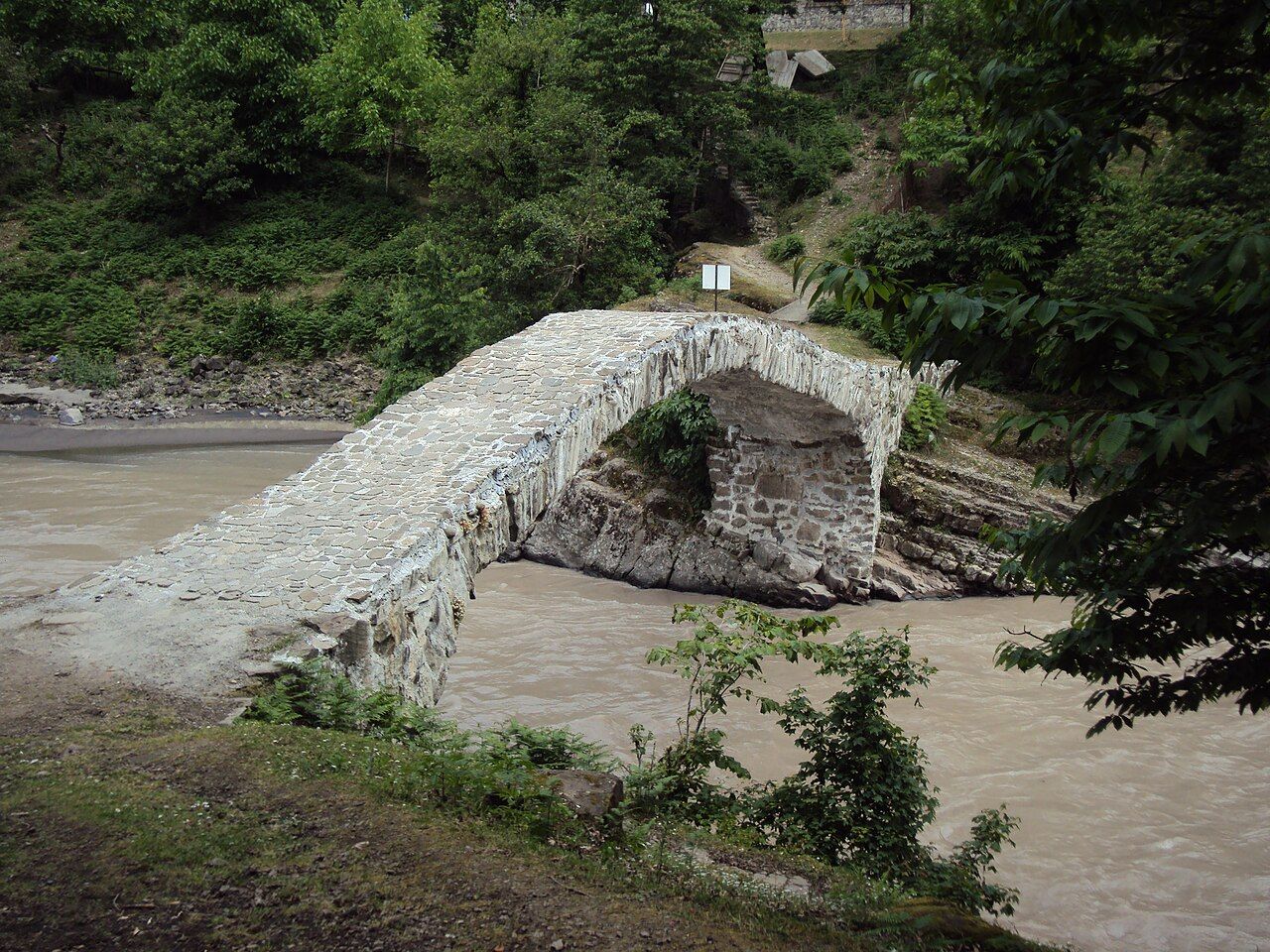
A short distance away, the Makhuntseti bridge crosses the Acharistskali in a single high arch of stone, steep and narrow, without parapets, its keystone far above the water. It is a medieval bridge, usually dated to the eleventh or twelfth century, and tradition connects it with Queen Tamar, the Georgian ruler of the late twelfth and early thirteenth centuries, whose name is attached to many old bridges and fortresses across the country. Whether she had any part in it, nobody can say.
The bridge was built for people and pack animals, not vehicles, and it can still be crossed on foot. Take care: the stone is worn smooth and can be slippery when wet, and there is nothing to stop a fall. The best view is from the riverbank below, where the arch frames the green slopes beyond.
Mtirala, the weeping forest
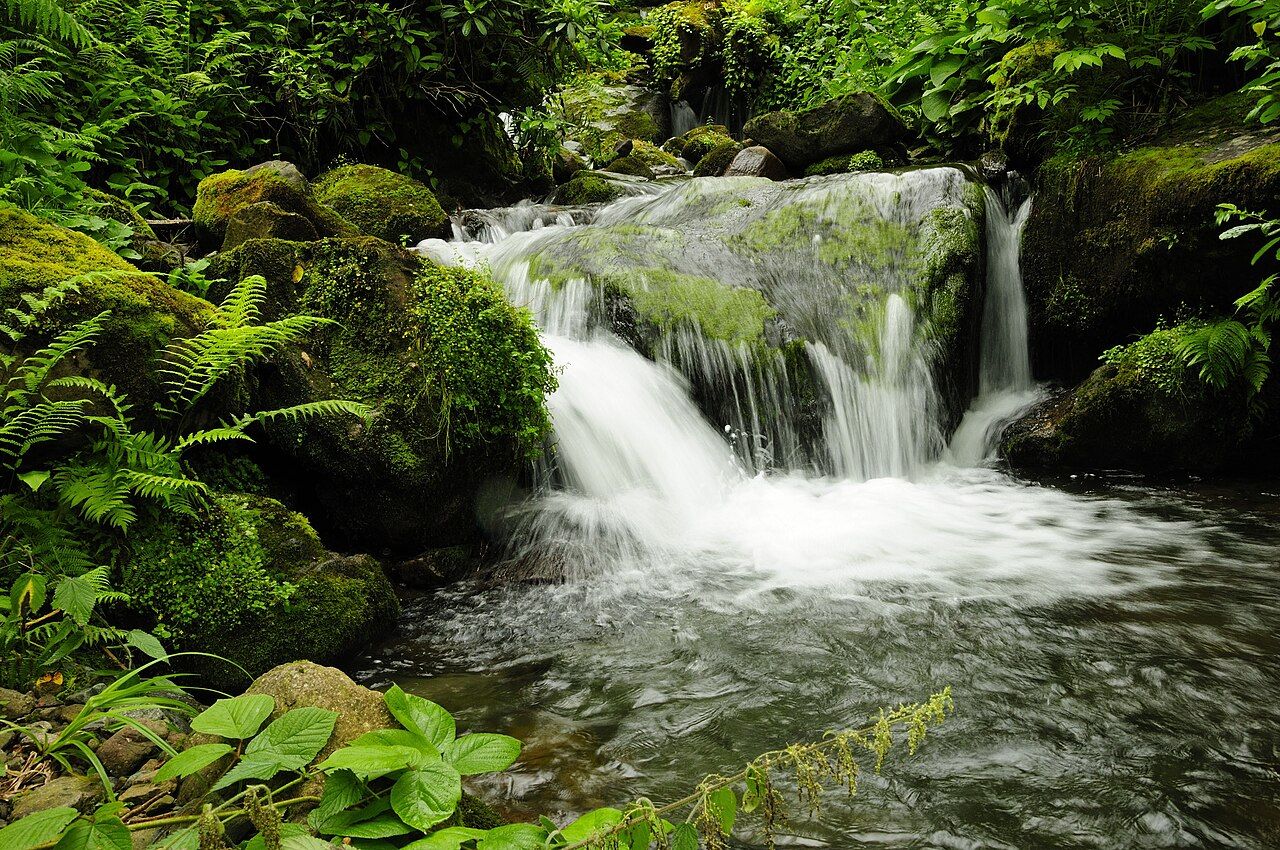
North of the Acharistskali, in the hills behind the coast at Chakvi, lies Mtirala National Park. Its name is usually explained as "weeping" or "crying", because this is among the wettest places in Georgia, with rain on a great many days of the year. The forest is Colchic: chestnut, beech and hornbeam, with a thick evergreen understorey, mosses, ferns and lichens on every surface. It is a remnant of the warm, moist forest that covered much of this region millions of years ago, and it feels quite unlike any woodland in northern Europe.
The park has a visitor area at the end of the access road and marked trails of different lengths, including a walk to a small lake and waterfalls. The roads up are narrow, and the trails muddy after rain, which is most of the time. Go with good shoes and a rain jacket whatever the forecast.
Wine and honey villages
The slopes of the lower valley, especially around Keda, are wine country on a small scale. Families grow vines on terraces and in gardens, and the local grapes include Chkhaveri, a pink-skinned variety at home in Ajara and neighbouring Guria, made into light, fragrant wines. Some households open their cellars to visitors; others simply sell from the gate. Honey is the other great product of these hills, from the chestnut and wildflowers of the forest, and you will see it sold by the jar along the roads.
Food in the valley is hearty: the famous Ajaran khachapuri, a boat-shaped bread filled with cheese and topped with butter and an egg, is the dish everyone recommends, and it is best eaten slowly. Pay in Georgian lari; cash is easier than cards in the villages.
Taxi up the valley
The simplest way to make this trip is by taxi from the port, agreeing a route and price for the day before you set off; minibuses run up the valley too, but on a timetable that may not suit a ship. Allow about an hour each way for the bridge and waterfall, more with stops. Mtirala and the waterfall can be combined in a day, but not comfortably with the botanical garden as well.
If you have only a few hours, the Batumi Botanical Garden gives a shorter taste of the same climate and plants, and the Roman fortress of Gonio-Apsaros lies near the river mouth where this road begins. Across the border to the west, the same wet hills are planted with tea above Rize.
More ports on this coast: Batumi and Ajara.