Old Nesebar sits on a rocky peninsula less than a kilometre long, joined to the mainland by a narrow neck of land, so that from the sea it looks like an island crowded with roofs. Inside a circuit of walls now reduced in most places to foundations, the town holds more medieval churches than seems reasonable for its size, along with nineteenth-century houses of stone and timber and lanes that end, sooner or later, at the water. UNESCO inscribed the Ancient City of Nessebar on the World Heritage List in 1983. It is small enough to cross in fifteen minutes and rich enough to fill a long morning.
Arriving: tender, causeway and the west gate
Ships calling at Nesebar usually anchor in the bay and bring passengers ashore by tender to the small harbour on the peninsula's southern side. Others berth at Burgas, some thirty-odd kilometres to the south, and send passengers up the coast by road. Either way you reach the old town quickly. Coming by road you cross the causeway from the new town, pass a wooden windmill that has become the town's emblem, and enter through the remains of the western fortifications: the base of a gate and its flanking towers, built of large squared blocks with later Byzantine work above.
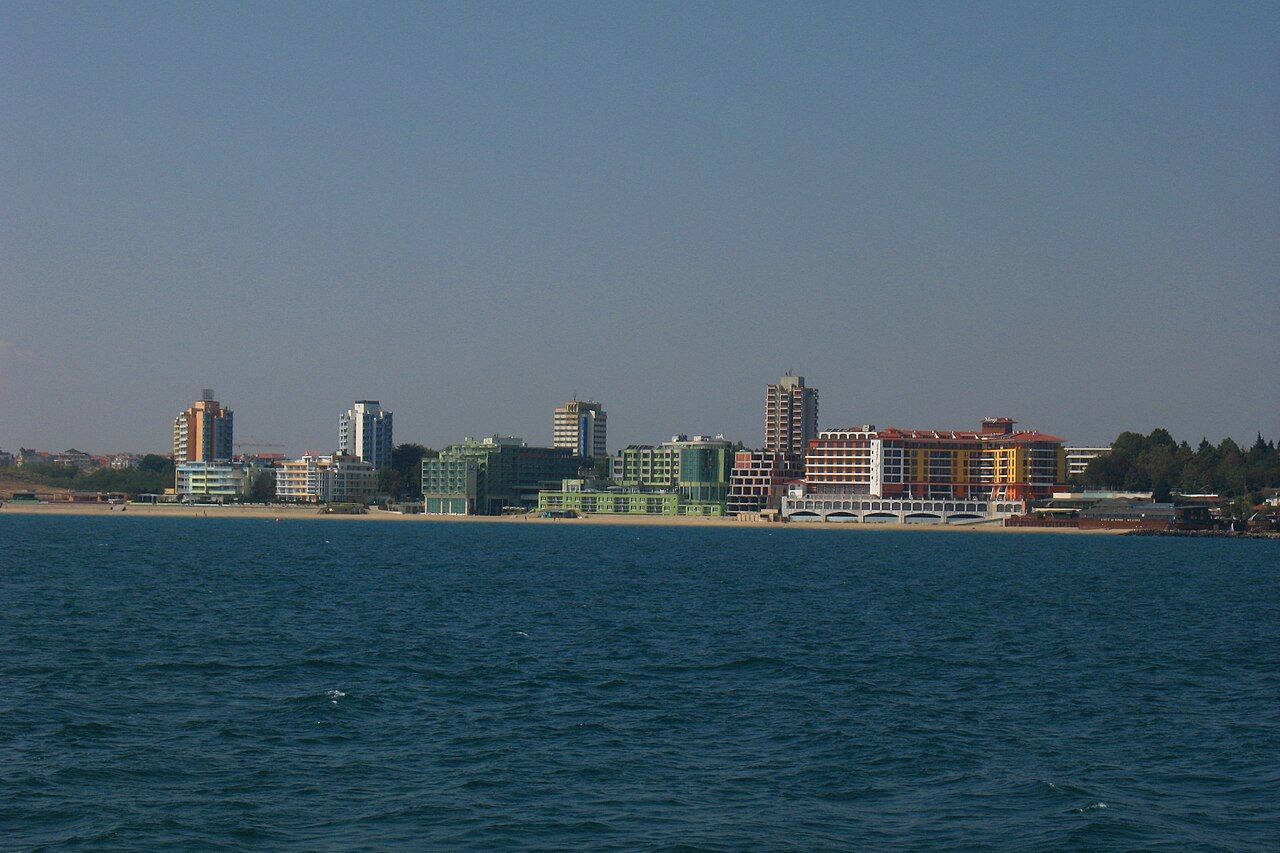
The causeway is a modern road laid along an old isthmus, and in rough weather the sea throws spray over the rocks on both sides. The new town on the mainland, and the resort strip of Sunny Beach to the north, belong to another world of hotels and boulevards. The old town begins at the gate, and once you are through it the scale changes at once.
Menebria, Mesembria, Nesebar
The peninsula was a Thracian settlement called Menebria before Greek colonists from Megara, traditionally dated to the end of the sixth century BC, made it the city of Mesembria. It grew rich on trade between the sea and the Thracian interior, struck its own coins and built temples, walls and an agora, most of which now lies under the later town or beneath the water that has crept over the northern shore. Roman rule followed, then a long Byzantine age in which Mesembria was a frontier fortress between Constantinople and the Bulgarian state, changing hands more than once.
Its richest medieval period came in the thirteenth and fourteenth centuries, and most of the churches you see date from those two hundred years. After the Ottoman conquest in the fifteenth century the town shrank to a fishing and wine-growing place, which is partly why so much survived: there was little money to pull things down and build anew. When modern tourism arrived in the twentieth century, the old town was protected before the resorts were built around it.
The town's archaeological museum, just inside the land entrance by the causeway, is a good first stop if you want the story in objects: Greek pottery, coins from the city's own mint, carved grave reliefs, and a room of icons from the churches. Half an hour there makes the ruins easier to read.
The churches of brick and stone
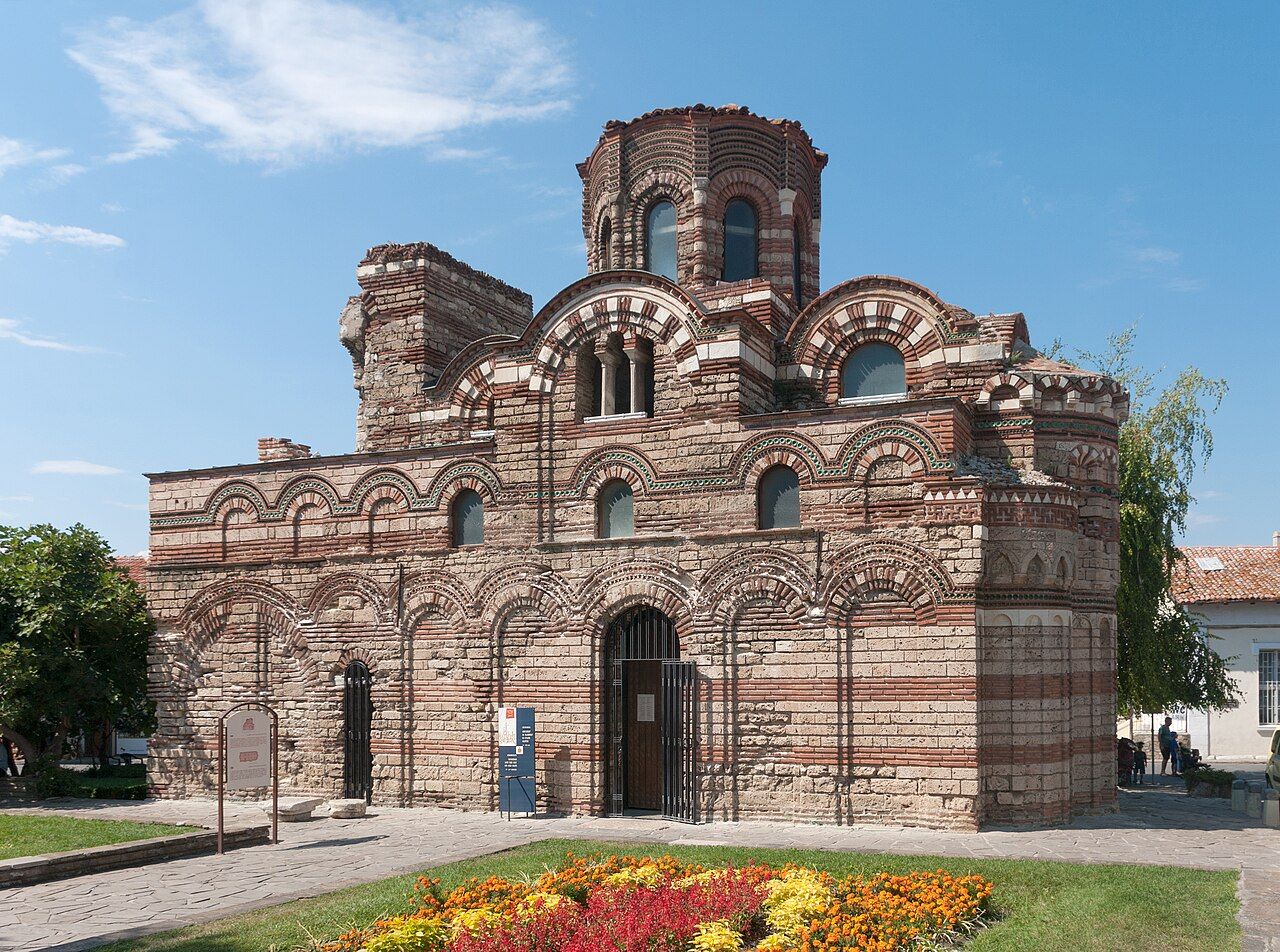
The churches of Nesebar are their own style, and once you have seen two you will recognise the rest at a glance. Walls are built in alternating courses of white stone and red brick, set with blind arches, zigzag and chequer patterns in brick, and green-glazed ceramic discs and rosettes that catch the light. Most are small, built for a neighbourhood or a family rather than a city, and many are roofless or partly ruined, which only makes the decoration easier to see.
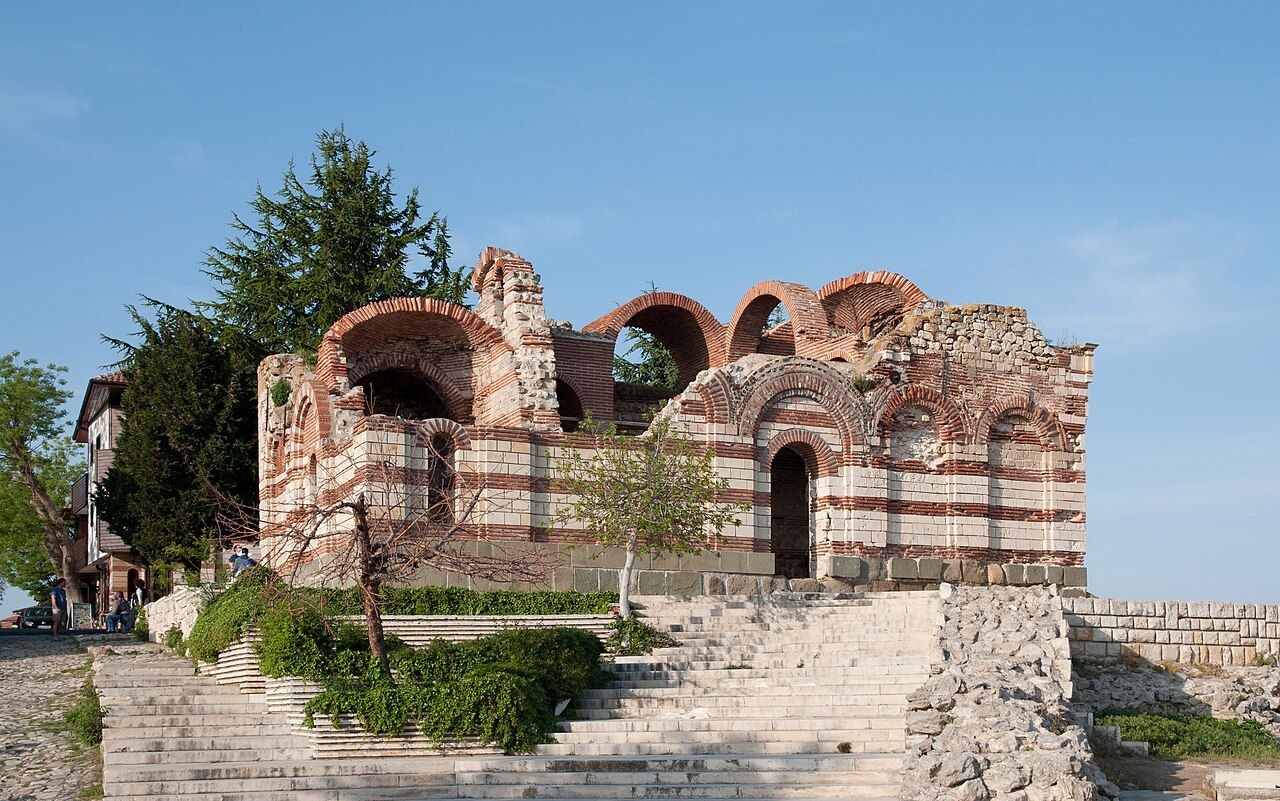
The Church of Christ Pantocrator, near the middle of the town, is the most complete of them, a thirteenth- or fourteenth-century cross-domed church with every external surface worked in banded masonry; it is often used for exhibitions. On the southern edge, above the sea, stands St John Aliturgetos, from the fourteenth century. Its name means "unconsecrated", and tradition holds that it was never used for a service. An earthquake in the early twentieth century brought down its roof, but its eastern end, facing the water, is the most richly patterned wall in Nesebar.
Between them, the roofless arcades of the Old Metropolis, a basilica of the early Byzantine centuries, stand on a small square, and the Church of St Stephen, once the town's cathedral, keeps an interior covered with paintings from the sixteenth century and later. Near the centre, the small Church of St John the Baptist, from around the tenth or eleventh century, is plainer, built mostly of rough stone, and shows the earlier style from which the banded churches grew. Several churches charge a modest entry fee and keep their own hours.
Most are small, built for a neighbourhood or a family rather than a city, and many are roofless or partly ruined, which only makes the decoration easier to see.
Timber houses and narrow lanes
Between the churches the lanes are lined with houses from the nineteenth century, the Bulgarian National Revival period: a ground floor of stone, an upper floor of timber or timber-clad framing, jutting out over the street on wooden brackets under wide eaves. Vines climb the walls, and the lanes are paved with uneven cobbles that turn slick after rain. One of these houses is kept as an ethnographic museum, furnished as a merchant family's home, and is the easiest way to see how the rooms were arranged around the upper floor.
Many of the others now hold shops, cafes and guesthouses, and in season their ground floors spill out into the lanes. The most rewarding walk is around the edge rather than through the middle. Follow the southern shore past St John Aliturgetos, then round the eastern tip, where the rocks fall to the sea, and back along the northern side, where the remains of the ancient walls show at low level and the view opens across the bay towards Sunny Beach and the hills.
High summer, and how to dodge it
From July to the end of August the old town fills with visitors from the resorts and with coach groups, and the central lanes can slow to a shuffle by late morning. Stone walls and paving hold the heat, and there is little shade away from the vines. If your ship arrives early, go straight to the churches and the edges while it is quiet, and leave the souvenir lanes for later. In May, June, September and early October the town is calmer and the light on the stone is kinder. If your ship stays into the evening, the old town is at its best after the day visitors leave: the walls give back the warmth of the day, the lanes empty, and the church facades turn gold in the low sun.
Bulgaria has used the euro since 1 January 2026, and small purchases are easy. If the day allows more than the old town, the coast to the south leads to Sozopol and ancient Apollonia, another Greek foundation on a headland, and to the bird lakes around Burgas. For the city to the north, see our story on Varna and its Sea Garden, and for the months when this coast is at its best, when to sail.
More ports on this coast: Bulgaria and Romania.